Understanding the Cycle Before You Jump In
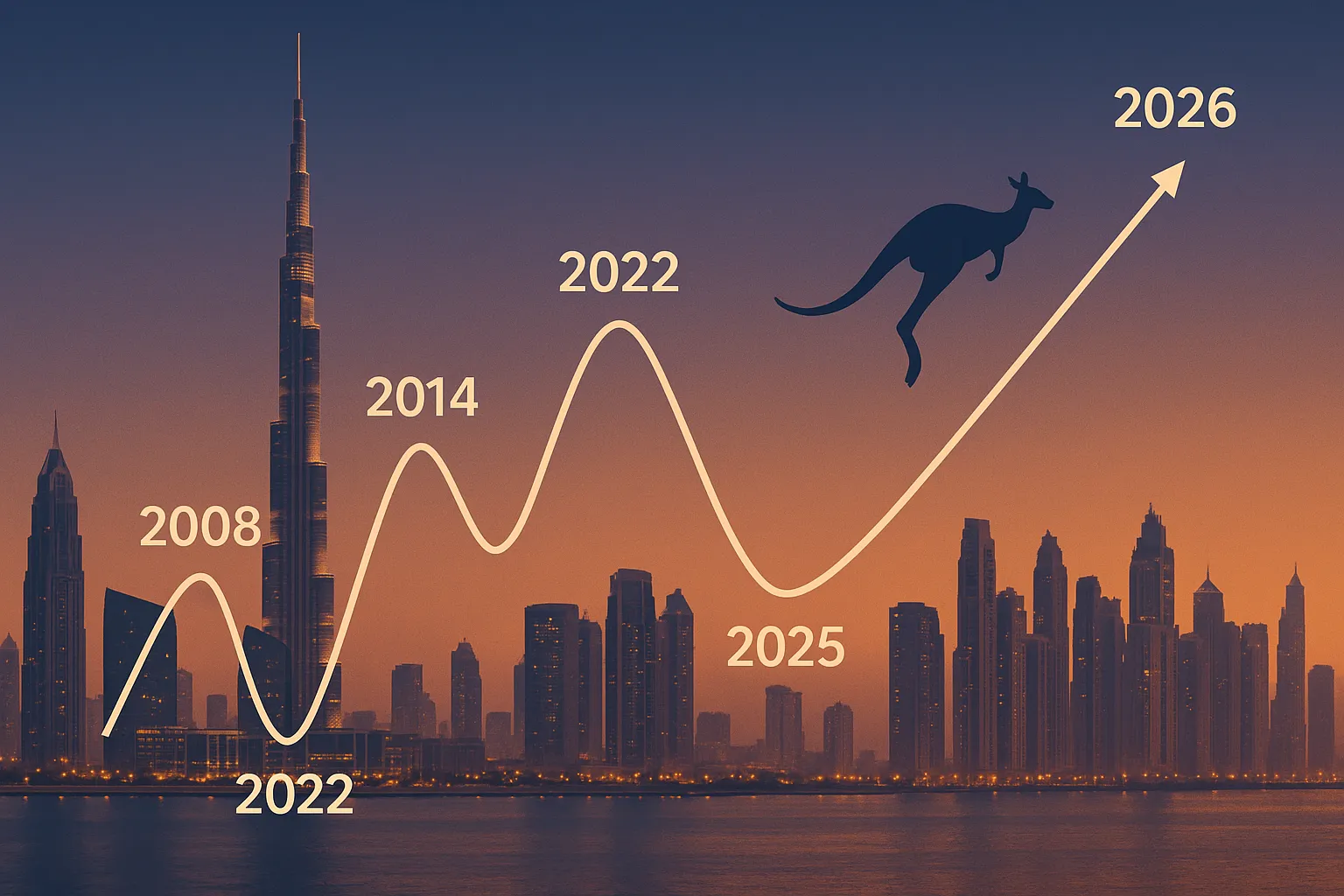
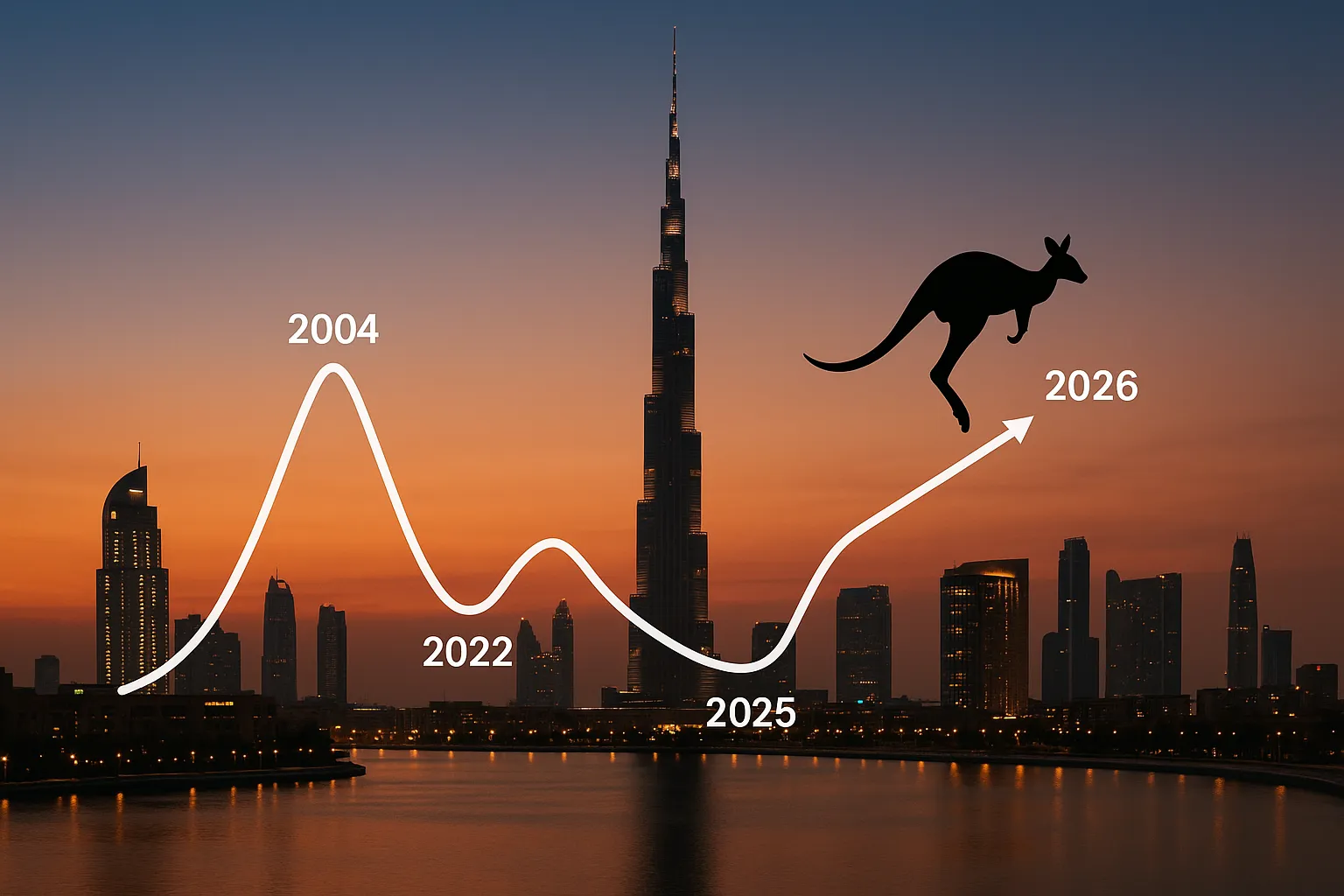
Dubai’s property market is famously cyclical. Since freehold ownership opened to foreign buyers in 2002, the emirate has moved through predictable waves of exuberance, consolidation and renewed growth. For Australian citizens eyeing a pied-à-terre or portfolio expansion in the Gulf, deciphering whether 2025–26 will behave as a buyer’s market or an investor’s market is the difference between a modest capital gain and a game-changing yield.
This guide unpacks the data, policies and sentiment shaping the next 24 months—then offers concrete tactics you can apply from Sydney, Melbourne or anywhere in between.
Buyer’s Market vs Investor’s Market: What’s the Real Difference?
Market watchers often treat the two terms as synonyms, yet they signal distinct phases in Dubai:
- Buyer’s market: Supply exceeds demand. Developers offer incentives (fee waivers, post-handover payment plans) to clear unsold stock. Prices plateau or soften. Ideal for end-users hunting lifestyle upgrades.
- Investor’s market: Rental demand and capital appreciation converge. Vacancy drops, mortgage rates stabilise, rents climb faster than freehold prices—pushing gross yields north of 7–8 %. Perfect for landlords and flippers willing to hold 3–5 years.
Where a city like Melbourne might take a decade to swing between the two, Dubai can change temperature within 18 months thanks to flexible visa rules, land-release cycles and regional geopolitical shifts.
Dubai in Mid-2025: The Dashboard at a Glance
| Metric | Q2 2024 | Q2 2025 | Δ YoY |
|---|---|---|---|
| Average apartment price (AED/sq ft)* | 1,425 | 1,560 | +9.5 % |
| Average villa price (AED/sq ft)* | 1,475 | 1,653 | +12.1 % |
| Average gross yield | 6.2 % | 7.1 % | +0.9 pp |
| Vacancy rate (main freehold areas) | 10.8 % | 8.3 % | –2.5 pp |
| Off-plan launches (units) | 34,000 | 47,200 | +38.8 % |
*Knight Frank MENA Residential Review, May 2025.
Takeaways:
- Prices are still climbing, but rental demand is rising faster.
- Vacancies are tightening as Golden Visa reforms extend 10-year residency to properties purchased for as little as AED 1.5 million.
- Developers are launching aggressively. By 2026, a wave of handovers could tilt the scales back toward buyers.
In short, today feels like the sweet spot of an investor’s market—but signs of future oversupply mean the window won’t stay open forever.
Three Catalysts That Will Shape 2025–26
- Expo City & new economic clusters
- The post-Expo 2020 site is transforming into Dubai’s newest special economic zone, with zero-tax incentives for circular-economy startups. Job creation equals tenant demand.
- AED-linked monetary policy
- The UAE dirham is still pegged to the USD, while the RBA is expected to cut rates by 50 bps in early 2026. A softer AUD could make AED-denominated mortgages more attractive to Australians earning rental income in USD-pegged currency.
- COP28 legacy and green retrofit mandates
- Buildings completed before 2010 must meet new energy-efficiency standards by 2030. Owners who upgrade early could command premium rents in the run-up to the deadline.
Reading the Cycle: Signals to Watch from Australia
- Developer payment plans stretching beyond 80 % post-handover → sign of mounting inventory, buyer’s market brewing.
- Multiple rental bids for the same apartment within 48 hours → investor’s market in full swing.
- RERA rental index adjusting upward twice within a quarter → rental demand overheating; yields can compress once supply catches up.
- New off-plan projects advertising guaranteed rental returns → historically appears 6–9 months before a buyer-friendly phase.
Set Google Alerts for “Dubai Land Department transaction volume” and cross-check with quarterly reports from JLL and CBRE. A sustained drop below 15,000 transactions per quarter has preceded every recent buyer’s market.
Strategies Tailored to Australian Investors
- Use AUD strength selectively
- When AUD rallies to 2.50 AED or above, pre-fund your UAE bank account for stage payments and service charges.
- Leverage corporate ownership
- Consider a Dubai International Free Zone Authority (IFZA) company to hold multiple properties; this structure simplifies legacy planning and offers 3-year investor visas for family members.
- Focus on rent-ready stock
- With yields at 7 %, buying completed units in Business Bay or JVC and listing on AirDNA-certified short-term platforms can outpace new-build appreciation until 2026.
- Plan your exit before you enter
- If your horizon is three years, target buildings with developer buy-back clauses or adjacent phases still under construction (they often set new benchmarks for resale pricing).
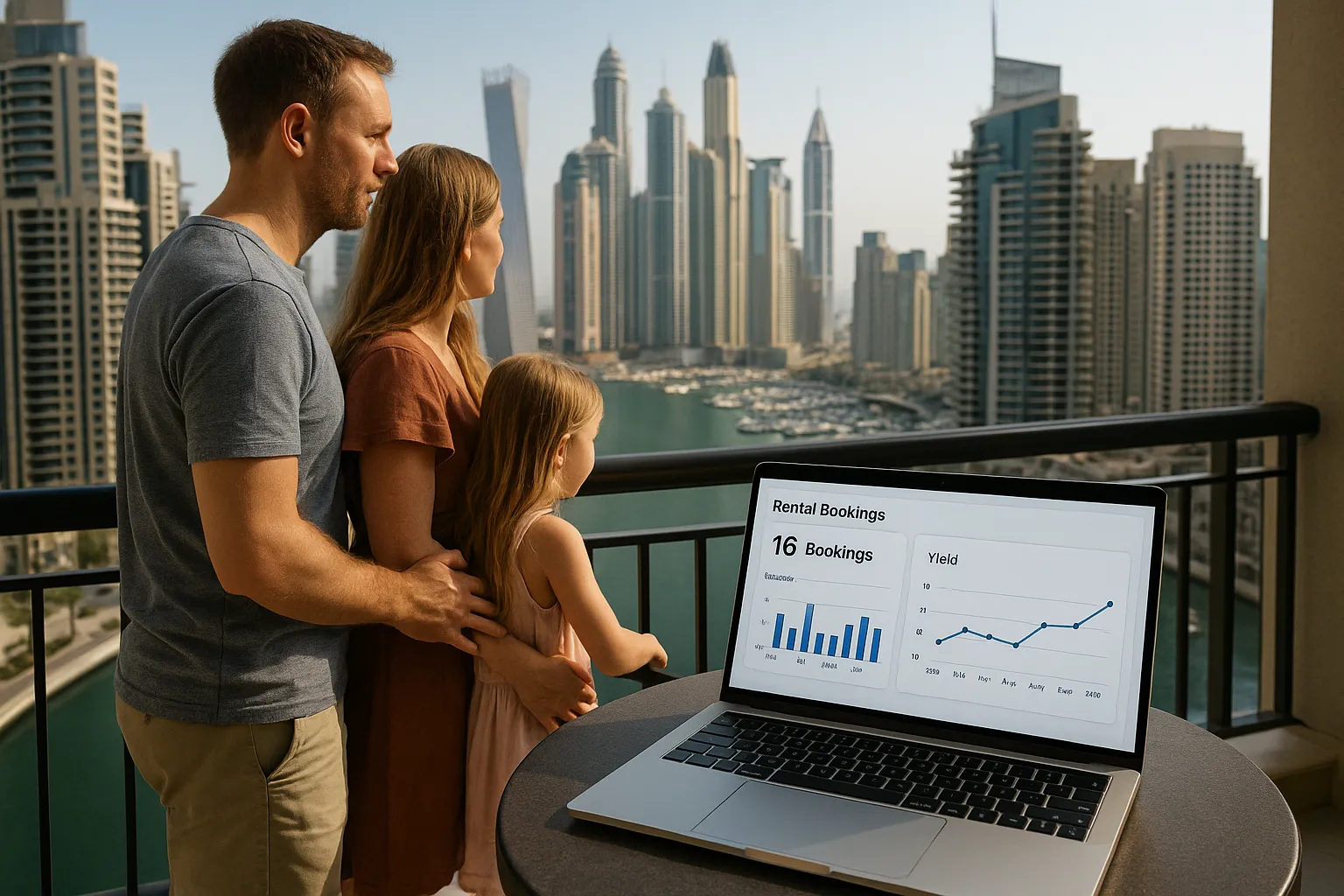
Case Snapshot: The Gilmores from Brisbane
- Purchased: 2-bed in Dubai Hills, July 2023, AED 2.1 million.
- Financing: 50 % cash, 50 % non-resident mortgage at 4.49 %.
- Rent strategy: Year 1 long-term lease (AED 115 k), Year 2 switch to holiday let (average AED 16,000/month during peak).
- Current valuation (mid-2025): AED 2.45 million (Knight Frank desktop).
- IRR: 14.8 % per annum.
Their plan? Refinance into a DIFC-based lender at 3.75 % fixed, hold through 2026, and sell into an anticipated buyer’s market once off-plan handovers flood competing stock.
Hotspots Worth Investigating Now
- Dubai Maritime City: Undervalued waterfront plots with the cruise terminal expansion due in late 2026.
- Al Furjan: Metro line complete, but price per sq ft still 25 % below Jumeirah Village Circle.
- Ras Al Khor – The Lagoons: Emaar’s eco-friendly master plan and direct access to the Wildlife Sanctuary promises capital growth plus ESG appeal.
A full suburb-by-suburb breakdown is available in our complimentary 2025 Investor Map; request it during your free discovery call.
Risk Radar: What Could Trip You Up
- Currency mismatch: Dividends in AED vs liabilities in AUD. Hedge via forward contracts with your Australian bank.
- Service-charge inflation: Budget 5–8 % annual increases as older towers retrofit to green standards.
- Over-reliance on off-plan: Completion delays can extend beyond 18 months—fatal if you’re counting on rental income to service a mortgage.
- Short-term letting regulations: Each emirate tweaks rules independently; keep up with DET (Department of Economy & Tourism) circulars.
How Dubai Invest Keeps You Ahead of the Curve
- On-ground valuations: Our licensed partners pull real-time data from the Dubai Land Department to identify streets where listing prices lag closed deals by >7 %.
- Cross-border financing: We negotiate non-resident mortgage rates that mirror UAE nationals’ spreads, shaving up to 90 bps off posted offers.
- End-to-end compliance: From tax residency certificates to FIRB equivalents for Australians, paperwork is packaged and tracked in your secure client portal.
- Exit strategies: We arrange bulk-sale placements with GCC family offices looking for stabilised assets, giving you a ready buyer when the cycle turns.
Curious to go deeper? Secure a seat at our upcoming Grand Business Conference where our CEO will present the full “Dubai Property Clock” model—see the agenda here.
Your Next Move
- If you favour capital preservation with upside, target completed units in rental hotspots before Q2 2026.
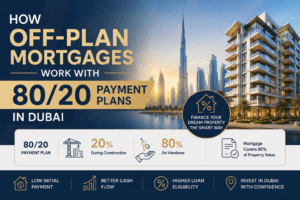
- If you favour maximum leverage, cherry-pick off-plan projects with 60/40 payment plans and aim to flip upon handover.
- Either way, timing is everything; the current investor’s market has legs, but the pendulum will swing once handovers peak.
Book a complimentary 30-minute consultation to receive personalised forecasts, financing scenarios and an action plan that fits your risk profile.
Dubai rewards those who read its cycles—not those who chase them. Let’s make sure you’re surfing the next wave, not paddling after it.