Co-working Spaces in Dubai for Australian Founders
Why Australian Founders Are Choosing Dubai Co-Working Spaces in 2026
Remote entrepreneurship is no longer a fringe trend. According to Australia’s Productivity Commission, more than 32% of Australian SMEs reported operating without a permanent office in 2024. At the same time, Dubai has cemented its reputation as the Middle East’s start-up capital, rolling out founder-friendly visas, 0 % personal income tax, and a booming talent pool. The bridge between these two facts is the vibrant co-working scene that lets you land in Dubai on Monday and plug into a fully functional office by Tuesday.
If you are running an Australian company and thinking about a satellite presence or even a full relocation this guide walks you through the best co-working spaces, the paperwork they can help streamline, and the smart strategies for keeping costs low while maximising market access.
Best Co-Working Spaces in Dubai for Australian Founders
Australian founders often look for co-working spaces that offer:
- Visa eligibility
- Business setup support
- Networking opportunities
- Flexible pricing
Here are some of the best options:
DMCC Co-Working Space
- Location: JLT
- Best for startups
- Visa included
DIFC Innovation Hub
- Best for fintech founders
- Premium location
Dubai Silicon Oasis
- Best for tech startups
Types of Co-Working Spaces in Dubai
Before you compare addresses and beanbags, you need to understand how Dubai classifies flexible workspace providers. Each model comes with different visa and company-formation implications.
- Free-zone business centres
- Operate inside one of Dubai’s 20+ free zones.
- Bundle desk rental with a trade licence and establishment card.
- Ideal for founders who want 100 per cent foreign ownership and simplified import-export logistics.
- Mainland co-working hubs
- Registered with Dubai’s Department of Economy and Tourism (DET).
- Let you serve the UAE domestic market without a free-zone boundary but typically require a local service agent when forming a company.
- Often situated in downtown districts close to clients and regulators.
- Private members’ clubs
- Think Soho House or Astrolabs memberships that prioritise community and events.
- Do not always provide a legal address for trade licences, so you may still need a separate free-zone package.
Quick comparison of 2026 pricing and perks
| Space | Location | Model | Hot-desk price (AUD / month) | Included visas | 24 × 7 access | Notable perks |
|---|---|---|---|---|---|---|
| DMCC Flexi Desk | Jumeirah Lakes Towers (JLT) | Free-zone | $490 | 2 residence visas | Yes | 0 per cent corporate tax until 2033, import-export gateway via Jebel Ali Port |
| Dubai Silicon Oasis Digital Park | Silicon Oasis | Free-zone | $430 | 1 visa | Yes | In-house R&D labs, government grants for tech prototypes |
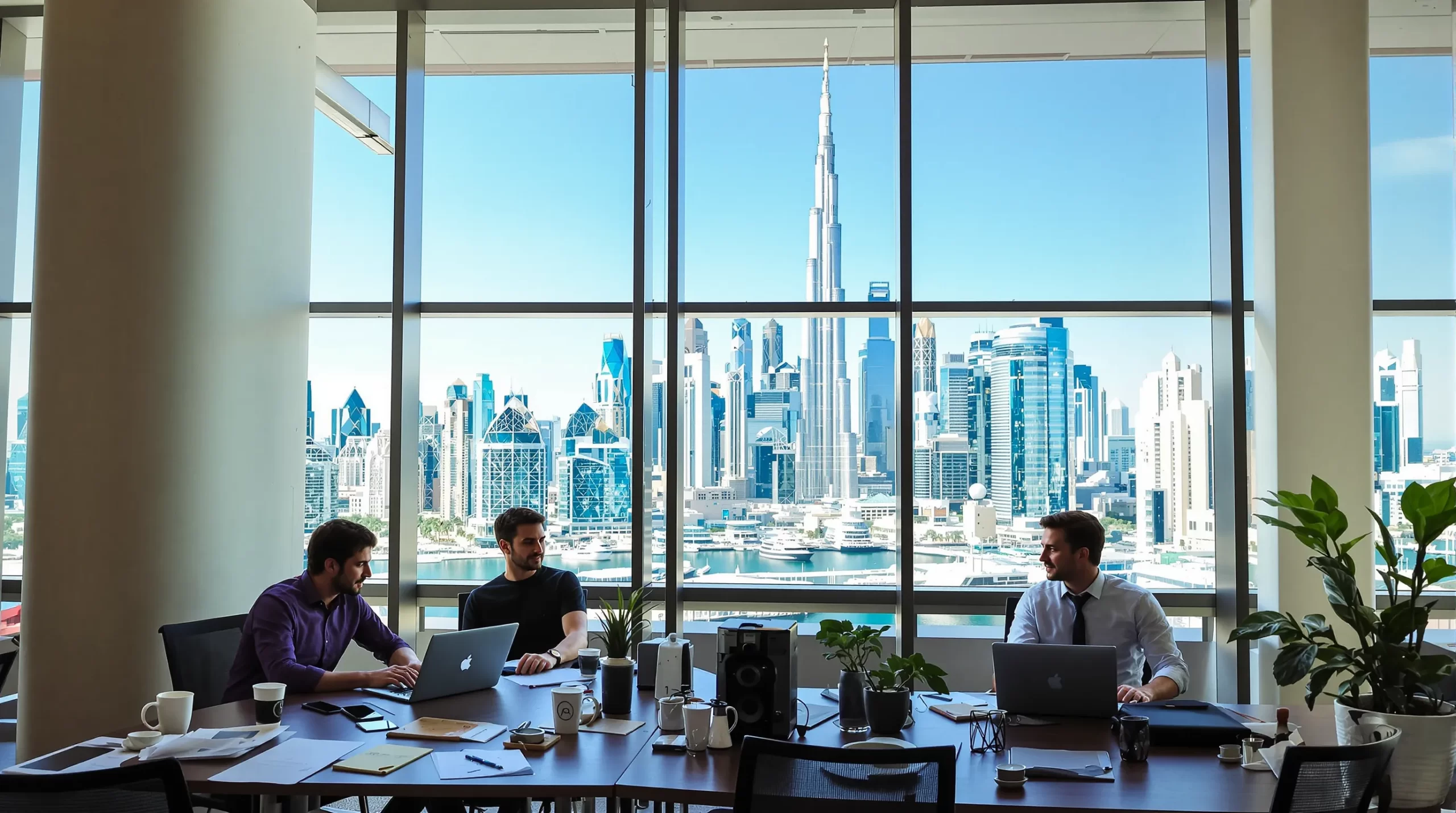
| Our Space Downtown | Burj Khalifa District | Mainland | $550 | None (separate DET licence) | Yes | Panoramic Burj views, on-site PRO services |
| AstroLabs | Cluster R, JLT | Private Club | $510 | Optional (via DMCC partner) | Yes | Weekly founder meetups, Amazon Web Services credits |
| A4 Business Bay | Business Bay Canal | Mainland | $380 | None | No (8 am-10 pm) | Budget option with podcast studio and Melbourne-style café |
Prices converted at 1 AED = 0.41 AUD, February 2025 XE average rate.
How Much Does a Co-Working Space Cost in Dubai?
Co-working space costs vary based on:
- Location
- Visa inclusion
- Desk type
Average Pricing:
- Hot Desk: AED 1,200 – AED 2,500
- Dedicated Desk: AED 2,500 – AED 4,500
- Private Office: AED 5,000+
Visas, licences and the co-working shortcut
A physical desk is just half the story. What sets Dubai’s co-working ecosystem apart is the legal wrapper many spaces offer:
- Residency visas: Free-zone operators such as DMCC or Dubai Silicon Oasis can sponsor two to three visas per flexi desk. This saves thousands of dirhams compared with standalone visa services.
- Trade licences: A co-working-based licence is recognised by UAE banks, allowing you to open a corporate account in as little as five working days.
- E-channel and establishment card: Required to issue future visas for additional employees. Reputable business centres file these automatically when you sign your lease.
Dubai Invest tip: Not all free-zone desks are equal. Some cheaper “smart desk” packages only give you a booking system for four hours per week, which immigration officers may flag during site inspections. Always read the utilisation small print.
Location matters: commute versus client access
Australian founders often underestimate Dubai’s geography. While the city looks compact on Google Maps, peak-hour traffic from Dubai Marina to Downtown can top 45 minutes. Consider these factors when picking your base:
- Fintech or crypto? The Dubai International Financial Centre (DIFC) sandbox requires licensees to maintain an office within the centre. DIFC’s own Innovation Hub offers plug-and-play desks from $630 AUD per month, including one Innovation Licence visa.
- E-commerce fulfilment? DMCC or Dubai CommerCity place you close to Jebel Ali Port and Al Maktoum International Airport.
- Investor meetings? Mainland Business Bay or Emirates Towers keep you near VCs, banks and government ministries.
Free Zone vs Mainland Co-Working Spaces in Dubai
| Feature | Free Zone | Mainland |
|---|---|---|
| Visa | Yes | Sometimes |
| Ownership | 100% | 100% |
| Office Requirement | Flexible | Required |
How to Set Up a Business Using Co-Working Space in Dubai
Step-by-step:
- Choose free zone
- Select co-working space
- Apply for trade license
- Apply for visa
- Open bank account
Hidden costs to watch in 2026
Co-working packages look straightforward until the first renewal reminder hits your inbox. Budget for these extras:
- Knowledge and Innovation Fees: 5 per cent of your trade-licence renewal, mandatory across all free zones.
- Health insurance: Every visa holder must carry UAE-approved cover. Expect $950–$1,400 AUD per person, depending on age.
- VAT on services: While corporate income is taxed at 9 per cent only if your mainland profits exceed AED 375,000, almost every invoice—printing, locker rental, meeting-room hours—adds 5 per cent VAT.
- Bank confirmation letters: Some banks charge AED 200 ($80 AUD) each time you request a “good standing” letter for regulators.
How to choose the right co-working space: a step-by-step checklist
- Identify your trade licence needs: free zone vs mainland.
- Estimate visa headcount for the next 24 months.
- Request a detailed service menu—meeting rooms, mail handling, PRO fees.
- Tour at least three spaces virtually or in person; test internet speeds (expect 500 Mbps on Etisalat fibre).
- Verify that the landlord’s name on the lease matches the entity listed on the trade-licence portal.
- Ask for client references, ideally other Australian investors in Dubai.
- Lock in an exit clause that lets you upgrade to a private office without penalty.
Ready to set up smart and fast?
Dubai’s co-working boom offers an unprecedented soft-landing platform for Australian founders. From bundled visas to networking with investors, the right desk can shave months off your expansion timeline.
Want personalised recommendations based on your headcount, industry and budget? Book a complimentary 30-minute consultation with Dubai Invest today and build your UAE beachhead the smart way.
Frequently Asked Questions
Can you get a Dubai visa from a co-working space?
Yes, you can get a Dubai residence visa through co-working spaces located in free zones such as DMCC and Dubai Silicon Oasis.
Which co-working space in Dubai includes visa?
✔ Typically included:
- Trade license
- Flexi-desk / shared office
- UAE residency visa eligibility
👉 These are common in:
- Free zones like DMCC, IFZA, Meydan
- Business setup providers offering “flexi-desk + visa” packages
Co-working providers often partner with licensing authorities, allowing you to register a company using the workspace address
How much does co-working space cost in Dubai?
Typical Cost Breakdown
- Day pass: AED 120–220/day
- Hot desk: AED 499–1,200/month
- Dedicated desk: AED 1,000–2,500/month
- Private office: AED 3,000–25,000+/month
📍 Location Impact
- Premium areas (Downtown, DIFC): Higher cost
- Mid-range (Business Bay, Marina): Balanced pricing
- Affordable (JLT, Deira): Best ROI
Can Australians open a company in Dubai?
Yes, Australians can 100% legally open a company in Dubai.
Key Benefits:
- 100% foreign ownership (Free Zones)
- 0% personal income tax
- Easy business setup process (often 5–10 days)
- Access to UAE residency visa
How long does the co-working trade-licence process take ?
A co-working (flexi-desk) trade licence in Dubai typically takes 3–7 business days in 2026. With visa processing included, the full setup usually takes around 2–6 weeks