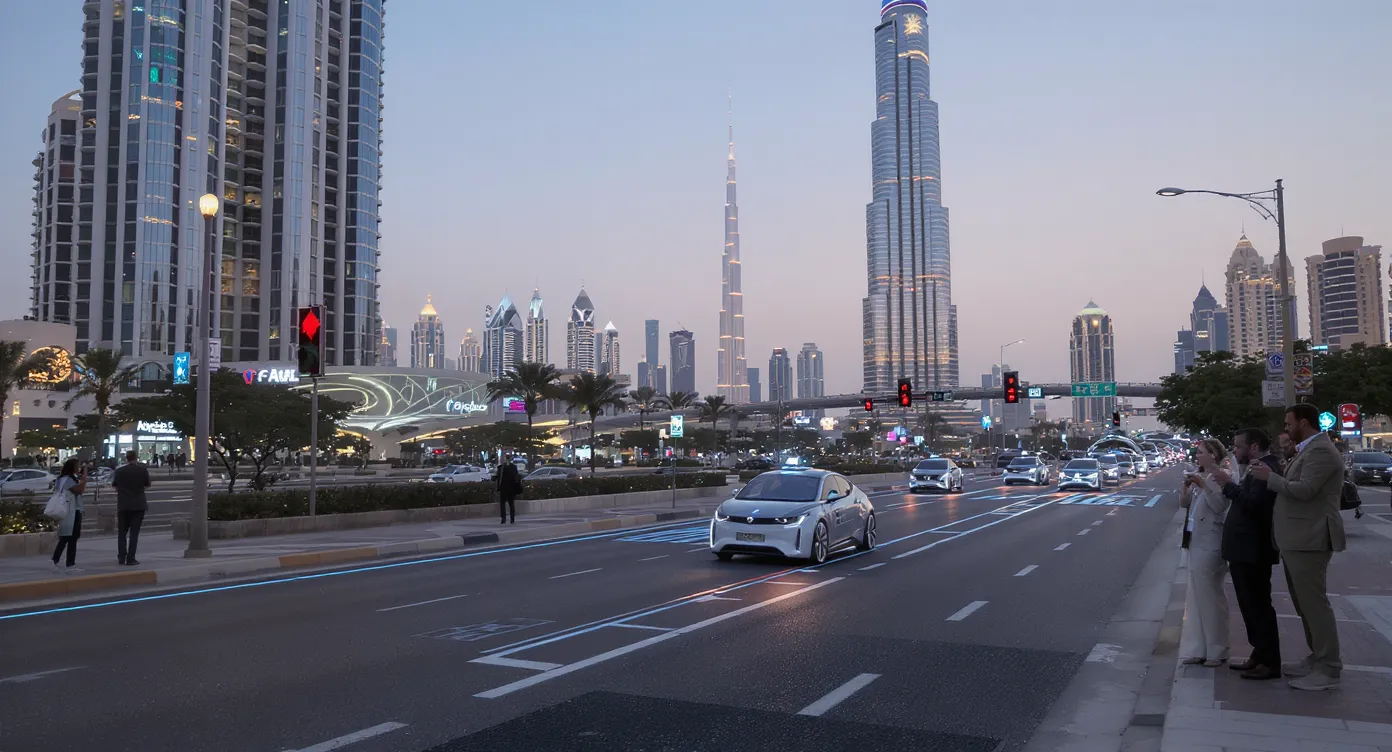
Dubai’s skyline already hints at the future, but its roads are about to make it real. With the emirate targeting 25 per cent self-driving trips by 2030, driverless transport Dubai is no longer a concept video; it is an investable theme gaining speed in 2025. For Australian investors seeking diversified growth, the convergence of robotics, AI and smart infrastructure is opening fresh corridors of return. This guide from DubaiInvest.com.au breaks down where the technology stands today, the policies powering it forward and the concrete autonomous vehicles investment plays worth short-listing.
Why Is Dubai Poised to Lead Global Driverless Adoption?
- Government-first approach: The Roads and Transport Authority (RTA) has run autonomous shuttle pilots since 2016 and signed an exclusive 10-year agreement with GM-backed Cruise for up to 4,000 robo-taxis.
- Regulatory sandboxes: Dubai’s Autonomous Transportation Strategy offers staged testing permits, import duty waivers and data-sharing portals that slash go-to-market time.
- Infrastructure readiness: Extensive 5G coverage, high-resolution mapping by Dubai Municipality and smart traffic signals in Downtown and Business Bay create a low-latency environment.
- Capital magnet: Sovereign entities like Mubadala and ADQ co-invest in mobility, while the UAE Innovation Fund allocates AED 5 billion to AI logistics between 2024-28.
What Deployments Are Live in 2025?
| Mode | Operator | Status Q4 2025 | Notable Metrics |
|---|---|---|---|
| Robo-taxi | Cruise – RTA | 40 Chevy Bolts covering Jumeirah & DIFC | 91% ride utilisation, zero at-fault incidents |
| Autonomous Metro Extension | Hitachi Rail | Driverless Red Line to Expo City | 16 trainsets, 46k pax per hour peak |
| Logistics Pods | Neolix – Dubai South | 25 last-mile pods servicing e-commerce zone | Cost per delivery down 23% |
| Air Taxi (eVTOL) | Joby – Skyports | Test flights at Palm Jumeirah Vertiport | Commercial launch target 2026 |
Early data shows fleet operating costs 45 per cent below conventional taxis and 30 per cent faster delivery times for pods—strong signals that commercial viability is close.
Government Initiatives and Incentives
Smart & Autonomous Vehicle Industries Cluster (SAVIC)
- Offers 100 per cent foreign ownership inside Dubai Industrial City.
- 15-year corporate-tax holiday for qualifying income.
Green Mobility Fund
- Matches private equity up to AED 20 million per project for battery or hydrogen tech tied to autonomous fleets.
Golden Visa for Mobility Innovators
- Five-year Golden Visa residency to founders or senior engineers employed by RTA-certified autonomy companies
Investors establishing a presence can incorporate quickly: see DubaiInvest.com.au’s step-by-step free-zone company guide.
Key Players to Watch
- Cruise: Exclusive robo-taxi concession; opened engineering hub in DIFC Innovation Centre.
- Huawei Middle East: Piloting Vehicle-to-X (V2X) roadside units on Sheikh Zayed Road.
- Neolix & Noon: Formed JV for autonomous parcel pods across Dubai South Logistics District.
- Joby Aviation & Skyports: Building vertiports that integrate with Dubai Metro.
Partnering with or taking minority stakes in these ecosystem anchors can fast-track market entry.
Benefits for Early Investors
- First-mover tariff incentives and priority pilot licences.
- Long annuity tails-fleet contracts typically span 8-12 years.
- Positive ESG optics-autonomous electric fleets cut CO₂ by up to 50 per cent.
- Synergies with existing Dubai property or logistics holdings, improving exit multiples.
Challenges and Risk Mitigation
- Regulatory evolution: Standards for Level 4 vs Level 5 autonomy still fluid. Mitigate by structuring milestones tied to RTA certification.
- Heat stress on sensors: Dubai summers can reach 50 °C. Back sensor suppliers offering solid-state LiDAR rated for high ambient temperatures.
- Insurance gaps: Liability frameworks are nascent. Allocate capex to telematics and black-box evidence vaults to negotiate lower premiums.
DubaiInvest.com.au provides on-ground due diligence and connects Australian capital with legal counsel specialised in autonomy to navigate these hurdles.
Where Is the Money Flowing? Comparison of High-Growth Segments
| Segment | 2025-30 CAGR (Dubai) | Entry Routes | Typical Ticket Size | Example Exits |
|---|---|---|---|---|
| Vehicle Hardware (sensors, batteries) | 28% | JV with OEM supplier hub | AUD 5-20 m | Trade sale to Tier 1 |
| Smart Infrastructure (V2X, edge compute) | 31% | DIFC tech licence + RTA pilot | AUD 2-10 m | Sale to telco / infra REIT |
| Fleet Leasing & Management | 22% | SPV in DMCC Free Zone | AUD 1-5 m | Yield sale to pension fund |
| Last-Mile Logistics Pods | 35% | Equity in Neolix franchise | AUD 0.5-3 m | M&A by e-commerce giant |
| Autonomous Mobility Data Platforms | 40% | SaaS start-up via IFZA | AUD 0.3-2 m | IPO on NASDAQ Dubai |
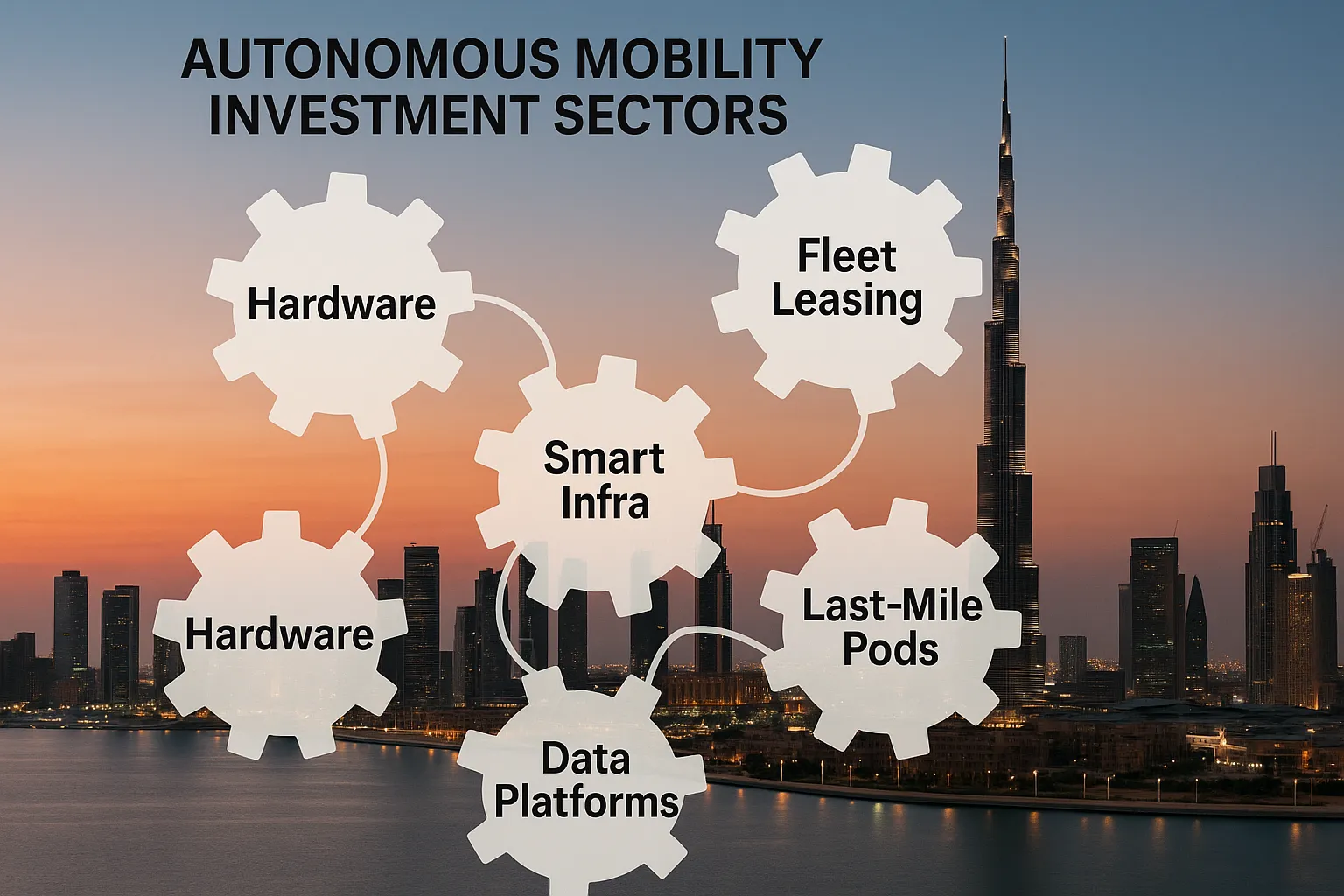
The table illustrates that smart infrastructure and data platforms offer the fastest growth, but hardware and fleet SPVs provide recurring cash flow—ideal for SMSFs or family offices seeking predictable distributions.
How Australians Can Capitalise in 2025
- Register an SPV in a mobility-friendly free zone like Dubai Industrial City or DMCC to ring-fence liability and tap the 0 per cent corporate-tax window. Refer to our free-zone tax guide.
- Co-invest with local funds: PitchBook tracks eight UAE mobility funds; minimum cheques start at USD 250k.
- Acquire logistics real estate near Dubai South to lease to autonomous fleets, locking in blended 9-10 per cent yields.
- Angel rounds via DIFC FinTech corridor: Regulatory sandbox allows Australian residents to subscribe to SAFE notes remotely.
- Secondary market buy-ins: RTA plans to privatise part of its robo-taxi operations via NASDAQ Dubai by 2027—position early.
DubaiInvest.com.au can structure end-to-end vehicles, arrange site visits and negotiate government grants—saving months of guesswork.
Case for Moving Now
McKinsey forecasts that Middle East autonomous mobility will be a USD 30 billion market by 2030, with Dubai capturing 55 per cent. Cost curves are falling-LiDAR units that cost USD 75k in 2017 sell for under USD 3k today. Early capital therefore benefits from valuation uplift and first-right supply agreements before mass adoption squeezes margins.
Ready to Explore Dubai’s Driverless Frontier?
Whether you plan to seed a LiDAR start-up, acquire logistics property or bid for an RTA fleet contract, you will need local insight, bank introductions and a structure that aligns with both UAE and ATO rules. DubaiInvest.com.au specialises in guiding Australian investors through that maze—from licence selection and grant applications to due-diligence site walks.
Book your complimentary 30-minute strategy call today at DubaiInvest.com.au and accelerate your entry into the future of mobility.