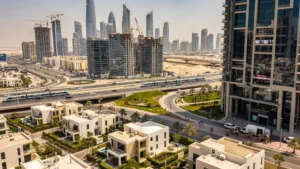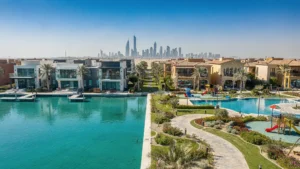
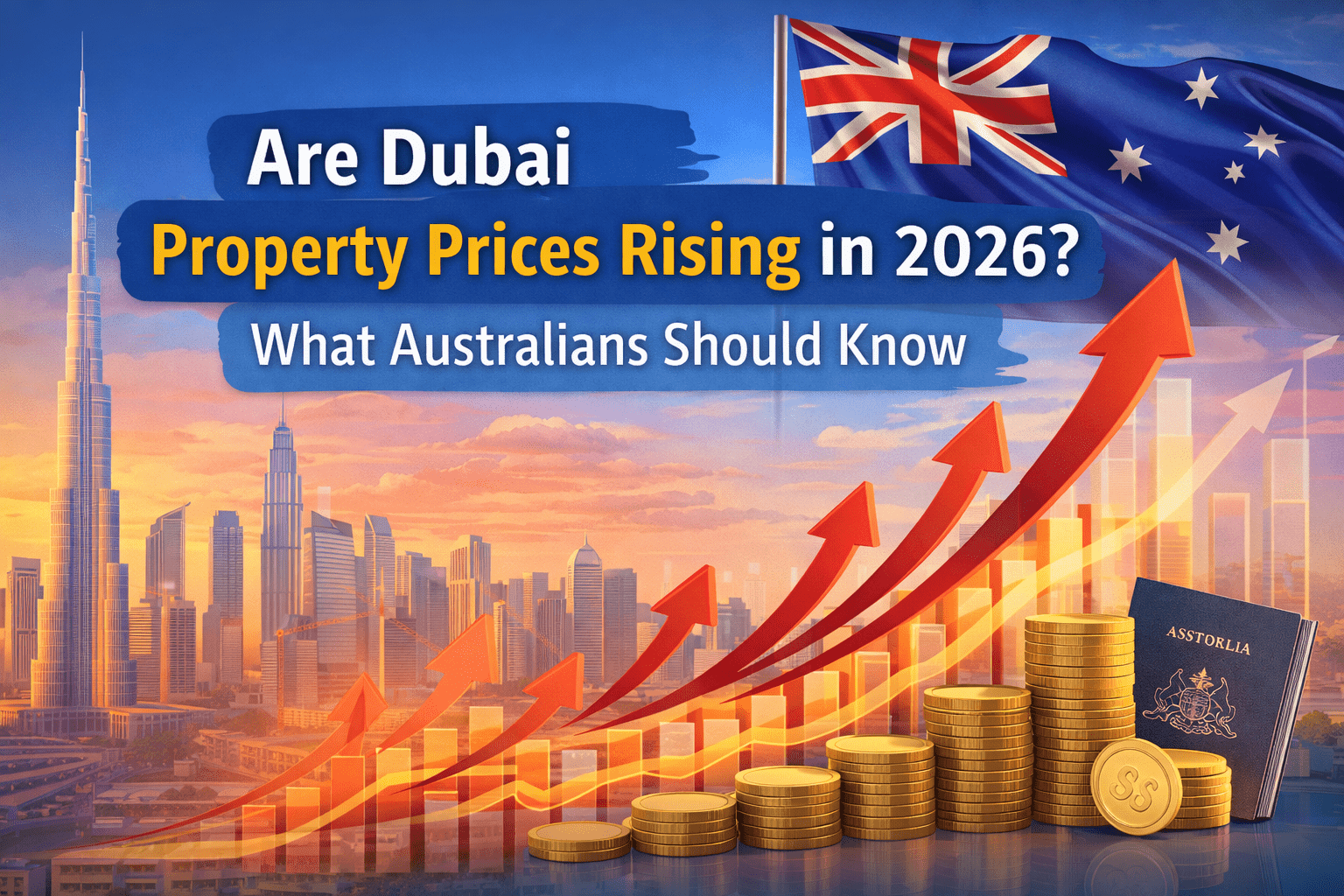
Dubai entered 2026 with a property market that still looks “tight” in many in-demand submarkets, particularly where end-user demand, long-term residency pathways, and premium lifestyle infrastructure intersect. While the pace of growth can vary quarter to quarter, the bigger story for Australians is that the city has continued to attract international capital and new residents, supporting pricing resilience.
Why Australians are watching Dubai closely
For many Australian investors, Dubai sits in a rare middle ground: a globally connected city with modern freehold ownership areas, attractive rental demand, and a transaction system that has become increasingly digitised and transparent. Add to that the practical reality that Australians can buy remotely, access non-resident lending in some cases, and structure ownership through entities when appropriate, and Dubai becomes a serious alternative to purely domestic portfolio building.
At Dubai Invest, our lead consultant Jomon brings both job experience and business experience in Dubai, which matters because “good on paper” deals often fall apart in the fine print, the building-level details, or the execution timeline.
Dubai Property Market Overview in 2026
Dubai’s market is best understood as several micro-markets moving at different speeds. Prime waterfront and luxury districts can behave very differently to mid-market investor zones, and off-plan pricing can diverge from ready stock depending on supply and payment-plan incentives.
If you want a reliable baseline, start with primary data sources:
- The Dubai Land Department (DLD) publishes transaction activity and registrations.
- Major research houses (for example, CBRE, JLL, Knight Frank, and ValuStrat) publish regular outlooks that help interpret supply, pricing, and rental trends.
For Australians, the actionable question is not only “are prices rising”, but also whether the specific building and unit you’re buying can deliver the yield, resale liquidity, and risk profile you need.
What Is Driving Dubai Property Prices in 2026?
Several forces continue to influence Dubai property prices in 2026. The mix matters because it affects whether growth is broad-based, or concentrated in select segments.
Key drivers include:
- Population and household formation: inflows of professionals and entrepreneurs increase rental demand and absorption of new supply.
- Residency pathways linked to investment: long-term residency options can shift demand toward higher-quality assets and particular price thresholds.
- Global capital allocation: Dubai often benefits when investors diversify away from single-country exposure.
- Quality-of-life infrastructure: transport improvements, master-planned communities, and new commercial nodes tend to support specific corridors.
- Payment-plan mechanics: off-plan launches can pull demand forward (and sometimes inflate expectations) when payment terms are unusually flexible.
This is where consultation is not a sales pitch, it’s risk control. Australians often see marketing headlines, but miss the second-order drivers like service-charge trajectories, handover timelines, and building management quality.
Which Areas in Dubai Are Seeing the Strongest Growth?
In 2026, stronger growth typically clusters in areas with a combination of rental depth, lifestyle appeal, and a pipeline that is either constrained or being absorbed quickly.
Rather than claim a single “best suburb,” it’s more useful to map areas by investor objective:
| Objective | What to prioritise | Examples of areas Australians often shortlist (varies by budget) |
|---|---|---|
| Resale liquidity | Strong buyer pool, recognisable communities, steady transactions | Dubai Marina, Downtown, Business Bay |
| Family-driven end-user demand | Schools, parks, villa/townhouse communities, long-term tenants | Dubai Hills Estate, Arabian Ranches corridors |
| Yield-focused entry | Tenant depth, manageable service charges, competitive pricing | JVC, parts of Arjan, Dubai South (project-specific) |
| Future infrastructure upside | Masterplan delivery, job hubs, transport links | Dubai Creek Harbour, Expo City/Dubai South corridors |
The catch is that “area growth” can hide building-level underperformance. Two towers across the road from each other can produce very different net yields once you include service charges, vacancy, furnishing requirements, and maintenance.
Are Prices Rising Across All Property Types?
Not evenly. In most cycles, Dubai moves in layers:
- Prime and luxury can run hot due to scarcity, lifestyle demand, and international buyer preferences.
- Mid-market apartments often track rental demand, new handovers, and financing conditions.
- Townhouses and villas can respond strongly to family migration trends and limited ready supply.
- Off-plan pricing can be influenced heavily by developer incentives, construction progress, and buyer sentiment.
For Australian investors, the key is matching the asset type to your plan:
- If you want immediate income, ready stock with realistic rent assumptions is usually easier to underwrite.
- If you want staged cash flow, selected off-plan deals can work, but only if the developer, escrow, and contract terms check out.
How Do 2026 Prices Compare to Previous Market Cycles?
Dubai is known for sharper cycles than some Australian capitals, partly because supply can respond quickly and international capital flows can change direction fast.
A practical way to compare 2026 to prior peaks is to look at:
- Credit conditions: higher or lower global rates affect affordability and investor appetite.
- Supply pipeline versus absorption: not just “units launching,” but “units completing and renting/selling.”
- Regulatory maturity: transaction digitisation, escrow enforcement, and broker regulation have generally improved over time.
In other words, 2026 may still show rising prices in certain segments, but the smarter approach is to assume dispersion. Some locations and product types will outperform, others will stagnate.
What This Means for Australian Investors
If you’re evaluating whether to invest in Dubai from Australia, 2026 tends to reward investors who do three things well:
- Underwrite net yield, not brochure yield (service charges, vacancy, letting fees, maintenance, furniture, and FX costs matter).
- Choose micro-location and building quality (developer track record and owners’ association standards influence long-term performance).
- Structure ownership properly (individual vs entity ownership, financing, and succession planning should fit your Australian tax and estate context).
This is exactly where Dubai Invest adds value. Jomon’s on-ground experience helps Australians avoid deals that look impressive online but fail basic operational due diligence once you dig into the building and the contract.
Risks Australians Should Consider
Dubai can be investor-friendly, but it’s not “set and forget,” especially from Australia.
Common risks we see include:
- FX exposure (AUD to AED): exchange-rate movement can change your real entry price and cash-on-cash returns.
- Off-plan execution risk: delays, specification changes, and handover disputes can affect outcomes.
- Service charges and building quality: rising fees can quietly erode net yield.
- Liquidity timing: some segments resell quickly, others can take longer depending on market sentiment.
- Cross-border compliance: Australian tax reporting, record-keeping, and entity structuring need to be planned, not patched later.
If you want to reduce these risks, a paid strategy consult is usually cheaper than a single wrong purchase decision.
Should Australians Buy Now or Wait?
There’s no universal answer, but there is a clean decision framework.
Buying now often makes sense if:
- You’ve found a specific asset where the rent, fees, and vacancy assumptions still produce an acceptable net yield.
- Your holding period is long enough to ride out cycle volatility.
- You have a plan for financing, FX timing, and ownership structure.
Waiting can make sense if:
- You’re relying on aggressive price-growth assumptions to justify the deal.
- You haven’t validated service charges, handover timing, or resale comps.
- Your FX position is stretched and you have no hedging plan.
A consultation helps you move from “market timing” to “deal quality.” The market can be up, and you can still overpay for the wrong unit.
Final Thoughts: Is 2026 Still a Smart Entry Point?
For many Australians, 2026 can still be a smart entry point, but only if you treat Dubai as a set of micro-markets and you validate the numbers at the building level. Dubai property prices may be rising overall, but your result depends on location, contract terms, total costs, and execution.
If you want clarity on where the opportunity is (and where the traps are), book a consultation with Dubai Invest. We’ll help you assess strategy, shortlist the right areas, and review properties with real investor-grade due diligence, then connect you with relevant property listings that match your goals.