
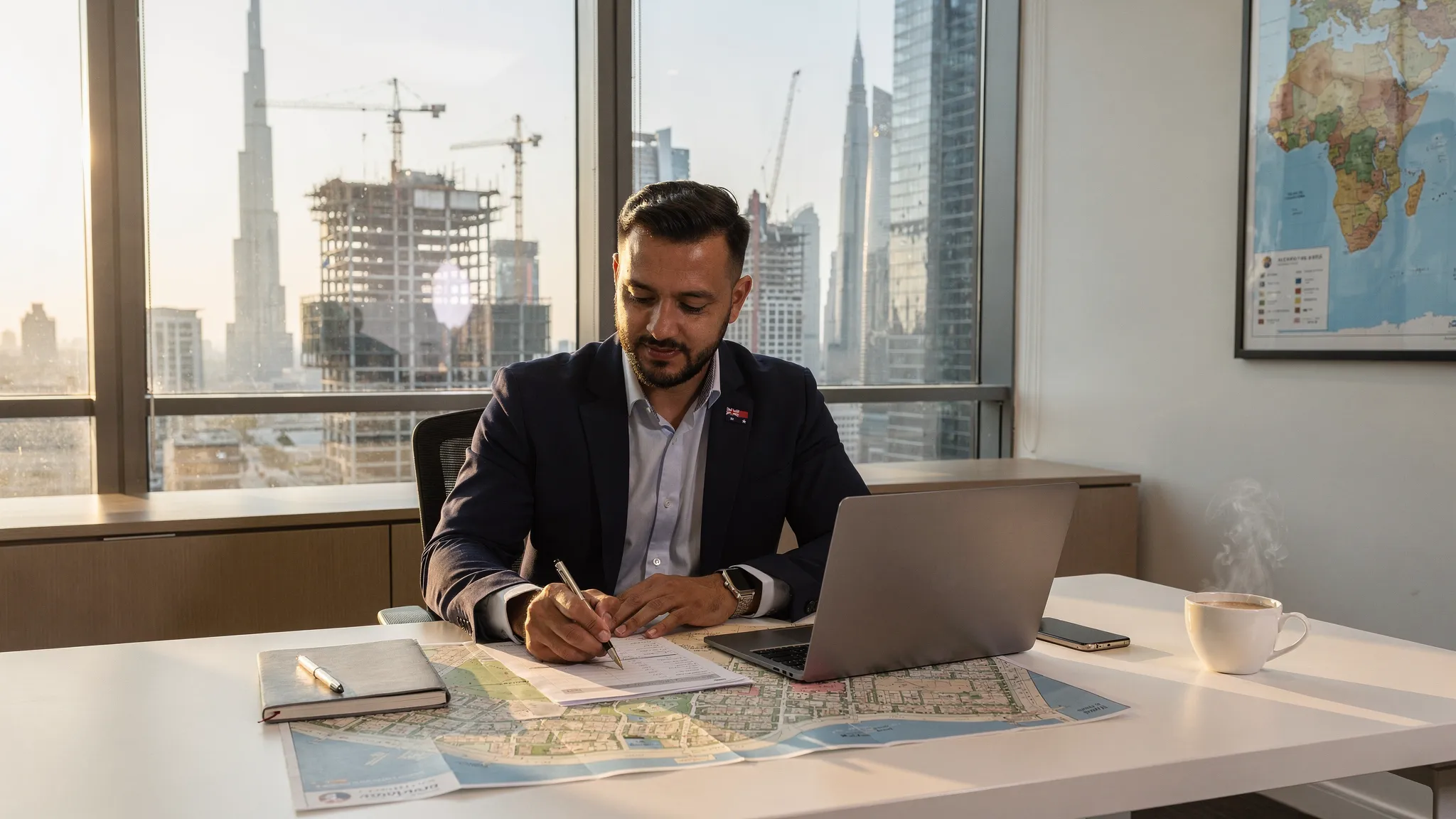
Step-by-Step: Buying Your First Investment Property in Dubai
Buying property overseas is exciting, but first-time investors often underestimate how many moving parts sit behind a “simple” purchase. In Dubai, the process is relatively structured, yet your outcome still depends on micro-location, building quality, fees, finance, and how well the deal is set up for remote ownership.
This guide breaks down the end-to-end journey for Australians buying their first Dubai investment in 2026, with practical checkpoints at each stage. If you want a faster path with fewer mistakes, a tailored consultation (before you pay a deposit) is usually the highest-ROI step, especially when you’re coordinating from Australia.
Why Invest in Dubai Real Estate in 2026?
Dubai continues to attract global capital because it combines investor-friendly ownership rules in designated zones with a deep rental market and ongoing infrastructure delivery. For Australian buyers, Dubai can also act as a diversification play, with different property cycles and tenant demand drivers compared to Sydney or Melbourne.
That said, “Dubai” is not one market. Building-level differences (maintenance, service charges, developer reputation, tenant profile) can change your return more than the suburb name. This is why many Australian investors choose to invest in Dubai with a deal-level underwriting approach rather than relying on marketing yield claims.
A good consultation should help you answer three questions up front:
- What is your real target, cash flow now, capital growth, or visa pathway planning?
- What is a realistic net yield after all fees and vacancy assumptions?
- What should you avoid, based on your risk tolerance and timeline?
Step 1: Define Your Investment Goal
Your first decision is not “which apartment”, it’s what the property needs to do for you.
Common first-investment goals include:
- Long-term rental income (stability, simpler operations)
- Short-term rental strategy (higher upside in select areas, higher operational complexity)
- Capital growth plus a clean resale story (liquidity and exit optionality)
- Portfolio foundation (a first asset that makes the second and third easier)
Want to more deeper about short -term vs long term rentals check out our guide for Short-Term vs Long-Term Rentals in Dubai profit comparison
This step is also where Australians should clarify ownership structure early, personal name vs company/SPV, because it affects banking, compliance, and sometimes resale mechanics.
Step 2: Choose the Right Area
Area selection should be tenant-led, not hype-led. Start with who your tenant will be, then work backwards.
Examples of tenant-led thinking:
- Professionals commuting to business districts
- Families wanting schools, parks, and larger layouts
- Travel and corporate short-stay demand (only where permitted and commercially viable)
A consultation can speed this up by aligning your budget to a shortlist of micro-markets where comparable rentals, vacancy risk, and service charges make sense.
Step 3: Decide Between Off-Plan or Ready Property
Off-plan and ready properties can both work, but they behave differently as investments.
Ready property generally suits first-time investors who want immediate inspection, clearer service-charge history, and faster rental income.
Off-plan can suit investors who want staged payments and potential upside, but it adds delivery risk, contract nuance, and timeline uncertainty.
Here is a practical comparison to keep your decision grounded:
| Factor | Off-plan | Ready property |
|---|---|---|
| Income timing | Later (after handover) | Immediate (after lease setup) |
| Risk profile | Higher (delivery, specs, delays) | Lower (you can inspect now) |
| Funding | Often payment plans (and sometimes mortgages later) | More compatible with standard mortgages |
| Due diligence focus | Developer, escrow, SPA clauses | Building quality, service charges, rental comps |
If you are unsure, book a strategy call and ask for a deal-by-deal model, not a generic recommendation.
Step 4: Understand the Full Costs Involved
First-time buyers often focus on price and forget the “ownership reality”, fees, service charges, vacancies, furnishing, and currency transfer costs.
Your typical cost categories include:
| Cost category | What it covers | Why it matters |
|---|---|---|
| Purchase and transfer costs | DLD transfer fee, registration/trustee fees (transaction-dependent) | Affects your true entry price |
| Professional support | Conveyancing/legal review, due diligence | Reduces contract and title risk |
| Financing costs (if applicable) | Bank fees, valuation, mortgage registration | Impacts cash needed upfront |
| Ownership and operating costs | Service charges, maintenance, insurance | Impacts net yield |
| Leasing setup | Marketing, tenant screening, Ejari setup | Impacts speed to rent |
Because you’re coordinating from Australia, also model timing risk: delays in KYC, bank processing, and document attestation can create knock-on costs.
Step 5: Secure Financing (If Needed)
Many Australians buy in cash, but financing can improve capital efficiency when the numbers stack up. Options can include non-resident lending through UAE banks (subject to eligibility), or alternative funding structures.
If you are planning finance, treat pre-checks as essential:
- Confirm whether the property type and building are lender-friendly
- Understand the deposit requirement and documentation expectations
- Factor in valuation timing and conditions (especially if you are remote)
Dubai Invest can coordinate the finance pathway with your buying timeline so you do not reserve a property and then discover the loan process does not fit.
Step 6: Reserve the Property
Reservation is where mistakes become expensive, because money moves before all facts are verified.
Before paying a deposit, align on:
- Exact unit details (view, size, parking, inclusions)
- Payment schedule and deadlines
- What is refundable vs non-refundable
- Who is responsible for fees and when
This is an ideal moment for a consultation, because you can pressure-test the deal terms, not just the brochure.
Step 7: Transfer Ownership
For ready properties, ownership transfer typically occurs through the regulated transfer process, with title deed issuance after completion. Off-plan purchases often involve registration steps linked to the off-plan system and then title issuance at handover.
Your critical success factors are:
- Correct buyer details (especially if buying under a company)
- Clean KYC documentation and source-of-funds evidence
- Contracts reviewed for practical “what if” scenarios (delay, defects, fee changes)
If you want to invest in Dubai remotely, ensure your signing and document plan is confirmed early, so you are not forced into last-minute courier or travel decisions.
Step 8: Set Up Property Management
The fastest way to protect your yield is to professionalise operations from day one, even if it is “just one apartment”. Property management is not only rent collection, it is vacancy reduction, tenant quality, maintenance SLAs, and compliance.
If you are choosing a manager from Australia, ask how they handle:
- Routine inspections and reporting cadence
- Maintenance approvals and emergency call-outs
- Vendor quality standards (licensed, insured, clear turnaround times)
A good way to evaluate vendor standards is to look at best-practice examples in other markets, for instance how residential garage door specialists present maintenance, same-day repair capability, and transparent service processes. You want that same operational discipline applied to your Dubai property’s maintenance network.
Step 9: Start Generating Rental Income
Rental income begins with getting the property “rent-ready” for the tenant you targeted in Step 2.
Key setup items typically include:
- A rent-ready condition check (and snagging where relevant)
- Pricing based on real comparable transactions, not listing optimism
- Lease type decision aligned to your strategy (long-term vs short-term where permitted)
For Australians, also plan the admin side: how rent is received, how expenses are recorded, and how you will track performance in AUD terms.
Common Mistakes First-Time Investors Make
Most first deals fail to hit target returns for predictable reasons, not bad luck.
Common issues we see with Australian investors include:
- Buying an area, not a building (service charges and maintenance can crush net yield)
- Believing headline yields without modelling vacancy, fees, and real operating costs
- Reserving before legal and commercial checks are complete
- Underestimating timeline friction (KYC, bank steps, document handling)
- Treating currency transfer as an afterthought, rather than part of the buying strategy
This is where an adviser with on-ground experience can save you months. Dubai Invest’s lead consultant, Jomon, brings real job and business experience in Dubai, which helps translate “how it works on paper” into “how it works in practice” when you’re buying from Australia.
Final Thoughts: Is Dubai Right for Your First Investment?
Dubai can be a strong first international real estate investment when your goal, location, building selection, and operating plan are aligned. It is not a set-and-forget market, but it can be an efficient market when you run a disciplined process and get deal-level guidance.
If you are considering a first UAE property investment in 2026, the most practical next step is a consultation to confirm strategy, shortlist areas, and stress-test costs and yields before you commit.
Explore Dubai Invest for expert guidance and curated property opportunities, and book a consultation to get a tailored shortlist and a clear step-by-step plan to buy with confidence.