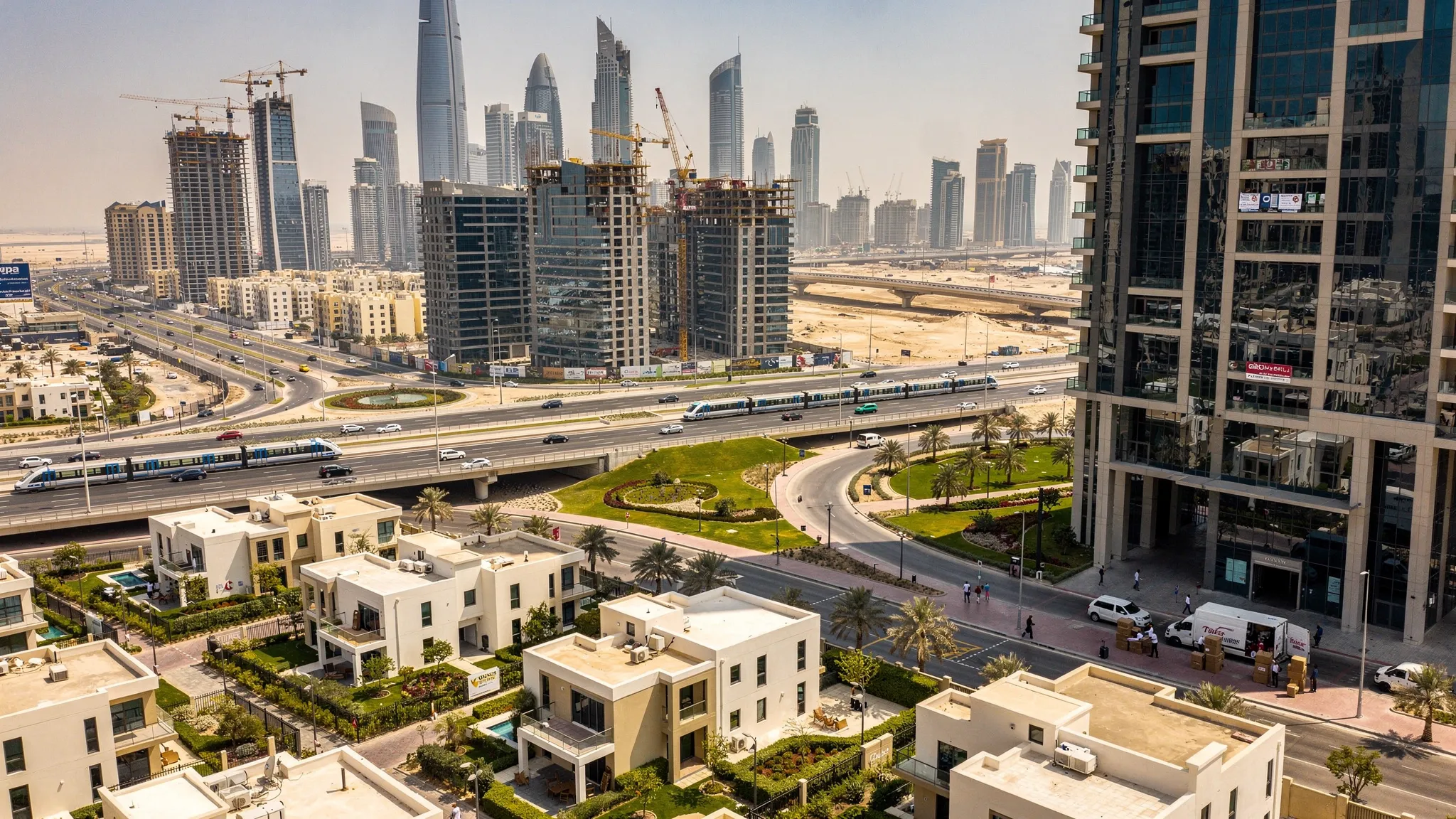
Dubai Rental Demand in 2026: Where Tenants Are Moving Now
Dubai’s rental market in 2026 is being shaped less by “Dubai is booming” headlines and more by micro-moves: tenants relocating building by building, chasing better layouts, newer communities, and commutes that fit hybrid work. For Australian investors and relocating families, that nuance matters because rental demand is not evenly distributed across the city.
At Dubai Invest, we see this shift up close. Our lead consultant, Jomon Ulahannan, has worked in Dubai and has firsthand business experience in the UAE, which helps clients read tenant behaviour beyond generic area guides. If you want an evidence-led suburb shortlist (for renting or investing), a consultation saves time and expensive trial and error.
Overview of Dubai Rental Market Trends in 2026
In 2026, demand is strongest where three elements overlap: (1) access to job hubs, (2) lifestyle infrastructure (metro, retail, schools, parks), and (3) stock quality (newer towers, better maintenance, more efficient floorplans). The market is also more segmented than it looks from overseas: two buildings in the same district can perform very differently due to service charges, parking, chiller costs, and management quality.
Another notable trend is tenant bargaining power shifting by segment. Premium waterfront and “walkable” districts still attract competition, while some older stock faces longer leasing timelines unless landlords upgrade fit-outs and pricing.
Why Rental Demand Is Rising in Dubai
Rental demand is rising primarily because Dubai continues to attract new residents across professional, entrepreneurial, and investor categories. Visa pathways, business formation activity, and the city’s position as a regional hub all feed into household formation and, ultimately, leasing demand.
There is also a practical housing pipeline effect: new completions do not always match the type of product tenants want (for example, family-friendly 2 to 3 bedroom units near schools, or well-managed furnished one-bedders near metro). When tenant preferences and supply mismatch, rents can stay firm even if overall inventory grows.
Most In-Demand Areas for Renters in Dubai (2026)
Across 2026, demand remains strong in districts that combine convenience with “day-to-day living”: gyms, supermarkets, cafés, and reliable building management. For many expats, walkability and commute predictability matter as much as the postcode.
Areas that typically remain high on tenant shortlists include:
- Dubai Marina and JBR for lifestyle and waterfront access.
- Downtown Dubai for proximity to prime offices and entertainment.
- Business Bay for centrality and growing residential stock.
- JLT for metro access and a slightly better value alternative to Marina.
- JVC for price-to-space and broad unit availability.
Affordable Areas in Dubai with High Rental Demand
Affordable demand in 2026 is concentrated in communities that offer decent building quality and practical commutes, even if they are not “tourist Dubai”. Tenants in this segment are often cost-sensitive professionals, early-stage founders, and young families.
Common high-demand, value-led choices include JVC, Dubai Silicon Oasis (DSO), Dubai Sports City, International City (select pockets and newer phases), Discovery Gardens, and parts of Deira and Bur Dubai for those prioritising older but central stock.
For Australian investors, these markets can look attractive on yields, but the building selection is everything. Two similar-priced units can produce very different net outcomes once service charges and vacancy risk are included.
Luxury Communities Seeing Increased Tenant Interest
Luxury demand in 2026 is being driven by executives, high-net-worth relocations, and families choosing lifestyle-first neighbourhoods with parks, premium schools, and low-friction daily living. Many luxury tenants are upgrading for space, privacy, and community feel.
Communities seeing strong interest often include Dubai Hills Estate, Palm Jumeirah, Bluewaters, City Walk, and established villa districts with strong school access. In this tier, quality of finishing, views, and building reputation influence leasing speed more than small differences in headline rent.
Emerging Locations Tenants Are Moving to in 2026
The emerging story in 2026 is not just “new areas”, it is new nodes of employment and lifestyle.
We are seeing tenants increasingly explore:
- Dubai South and the Expo City orbit, especially for value, newer stock, and long-term infrastructure upside.
- Dubai Creek Harbour for modern waterfront living at a relative discount to older prime waterfront districts.
- Arjan (and nearby growth corridors) for newer buildings and more competitive rents.
- Al Furjan as a family-friendly, connected option with improving retail and community amenities.
If you are deciding whether an “emerging” location is tenant-ready or still in a ramp-up phase, a consultation helps you avoid buying into a masterplan before the tenant ecosystem is mature.
Average Rent Prices in Dubai by Area (2026)
Because rents vary materially by building, furnishing, cheque count, and exact proximity to metro, it is more useful in 2026 to start with price positioning and then validate with live tools.
The Dubai Land Department (DLD) Rental Index and RERA rent calculator are the right baselines for sense-checking renewal and asking rents (especially when negotiating increases). You can then compare with live listings to see where landlords are “testing” pricing.
| Area (2026) | Typical price positioning | Best suited to | What to validate before signing |
|---|---|---|---|
| Dubai Marina / JBR | Premium | Lifestyle-driven professionals | Parking, traffic noise, building age, chiller terms |
| Downtown Dubai | Premium | Central office access, walkability | Lift wait times, amenities crowding, view premiums |
| Business Bay | Mid to premium | Central commuters, value seekers | Building management quality, access roads |
| JLT | Mid | Metro commuters | Cluster walk times, building maintenance history |
| JVC | Value to mid | Space seekers, broad tenant pool | Developer quality, service charges, access routes |
| Dubai Hills Estate | Premium | Families, park lifestyle | School commute, community fees, villa vs apartment mix |
| Dubai South | Value to mid | Value-led renters, long-term planners | Community maturity, retail coverage, transit plans |
If you want an area-by-area rent breakdown by unit size, Dubai Invest can walk you through the tenant-led rent bands during a consultation (and show how they translate into realistic net yield for investors).
Apartment vs Villa Demand Trends in Dubai
Apartments remain the default choice for new arrivals and most single professionals due to availability, amenities, and proximity to business districts. In 2026, demand is strongest for efficient one-bedroom and two-bedroom layouts that work for hybrid life (a real living area that can double as a workspace).
Villa and townhouse demand remains elevated among families seeking privacy, outdoor space, and community facilities. However, villas are more sensitive to school proximity, traffic patterns, and maintenance expectations. Investors should budget for higher upkeep and more variability in tenant turnover.
Where Expats Are Choosing to Live in Dubai
Expat choices in 2026 often cluster around lifestyle archetypes:
- “Close-to-everything”: Marina, JLT, Downtown, Business Bay.
- “Family-first”: Dubai Hills, Arabian Ranches-style communities, Al Furjan, Town Square.
- “Value-led”: JVC, DSO, Sports City, Discovery Gardens.
- “New Dubai”: Creek Harbour and parts of the Dubai South corridor.
For Australians relocating, the right pick usually depends on schooling, commute frequency, and whether you need a furnished setup on arrival. Those inputs also affect how negotiable a landlord might be.
Impact of Remote Work on Rental Demand
Remote and hybrid work is changing rental demand in subtle ways. Tenants are less willing to pay top-tier rents purely for CBD proximity if they only commute a few days a week. Instead, they prioritise space, sound insulation, natural light, and reliable building facilities.
This also influences landlord strategy. Some owners now optimise apartments for “work-from-home liveability” (better desks, lighting, faster internet, practical storage). For short-term and mid-term landlords, presentation and marketing matter more than ever. If you are running a holiday home or corporate-let style strategy, improving your digital funnel (photos, copy, SEO, direct booking) can make a measurable difference, and a specialist like WRM Design | Marketing Services can help sharpen conversion-focused digital strategy.
Short-Term vs Long-Term Rentals: What’s Trending?
In 2026, long-term rentals remain the preferred option for most tenants, stability, Ejari registration, and predictable pricing. Short-term rentals still perform in tourist-heavy and prime lifestyle zones, but they are operationally heavier and more regulation-sensitive.
The “trend” is increasingly a hybrid approach: investors holding long-term by default, then switching to short-term only when (a) the building is holiday-home friendly, (b) the unit can achieve strong occupancy, and (c) management fees and service charges still allow healthy net returns.
Learm more about: short term rental and long term rental
Rental Yield vs Demand: What Investors Should Know
High rental demand does not automatically mean the best yield. Prime districts can have strong demand but lower yields because prices are higher. Conversely, value districts can post attractive gross yields but disappoint on net yield if service charges, vacancy, or tenant quality are mis-judged.
For Australian investors, the right question is: What is the realistic net yield after service charges, management, vacancy assumptions, and FX costs? This is where Dubai Invest’s consultation adds real value. Jomon’s on-ground experience helps clients underwrite at the building and unit level, not just “area averages”.gyt
Government Policies Affecting Dubai Rental Market
Dubai’s rental market is shaped by a mix of tenancy rules, index-based rent increase guidance, and property registration processes. For tenants and landlords, the practical policy touchpoints are usually:
- Ejari registration for long-term leases.
- RERA/DLD rent index and increase calculator for renewal negotiations.
- Holiday home licensing rules (for short-term leasing) and building-level permissions.
Policy does not remove market cycles, but it does create a framework that influences how fast rents can reset and how disputes are handled.
Future Outlook: Dubai Rental Market Beyond 2026
Beyond 2026, rental performance will likely stay micro-market driven. Expect continued rotation into newer, better-planned communities, especially those linked to major employment corridors and infrastructure upgrades.
For investors, the bigger opportunity is avoiding “average thinking”. The same district can contain both outperforming buildings and underperformers. For tenants, the edge comes from timing and negotiation: locking the right unit before peak leasing windows can matter as much as the suburb choice.
Tips for Tenants Looking to Rent in Dubai in 2026
If you are renting in 2026, focus on total cost of living, not just the annual rent figure. Before you commit, confirm what is included and how responsive building management is.
Practical checks that reduce surprises:
- Validate renewal and increase logic using the RERA/DLD rent tools.
- Ask about chiller arrangements (included, separate provider, or billed differently by building).
- Inspect maintenance responsiveness (AC performance, water pressure, lift reliability, parking access).
- Confirm furnishing inventory in writing if renting furnished.
- Understand all upfront costs (deposit, agent fee, Ejari, move-in fees if applicable).
If you are relocating from Australia and need a time-efficient shortlist (matched to commute, schools, and budget), book a consultation with Dubai Invest. We can help you avoid the common “looks great online” traps.
Frequently Asked Questions
Why is rental demand increasing in Dubai in 2026?
Rental demand in Dubai is rising due to:
- Population growth
- New job opportunities
- Business expansion
- Expats relocating to Dubai
- Limited supply in popular areas
These factors are pushing tenants to explore new communities.
Which areas in Dubai have the highest rental demand in 2026?
Popular rental demand areas include:
- Dubai South
- JVC (Jumeirah Village Circle)
- Dubai Hills Estate
- Arjan
- Dubailand
- Business Bay
These locations offer affordability and modern amenities.
Are tenants moving to affordable areas in Dubai?
Yes, many tenants are moving to more affordable communities due to rising rents in prime locations like:
- Downtown Dubai
- Dubai Marina
- Palm Jumeirah
This shift is increasing demand in suburban areas.
Is Dubai rental demand expected to increase in 2026?
Yes, rental demand is expected to remain strong due to:
- Economic growth
- Golden Visa programs
- Expanding job market
- Population increase
Which property types are in high demand in 2026?
High-demand rental properties include:
- Studio apartments
- 1-bedroom apartments
- Townhouses
- Family-friendly villas
Affordable apartments remain the most popular.