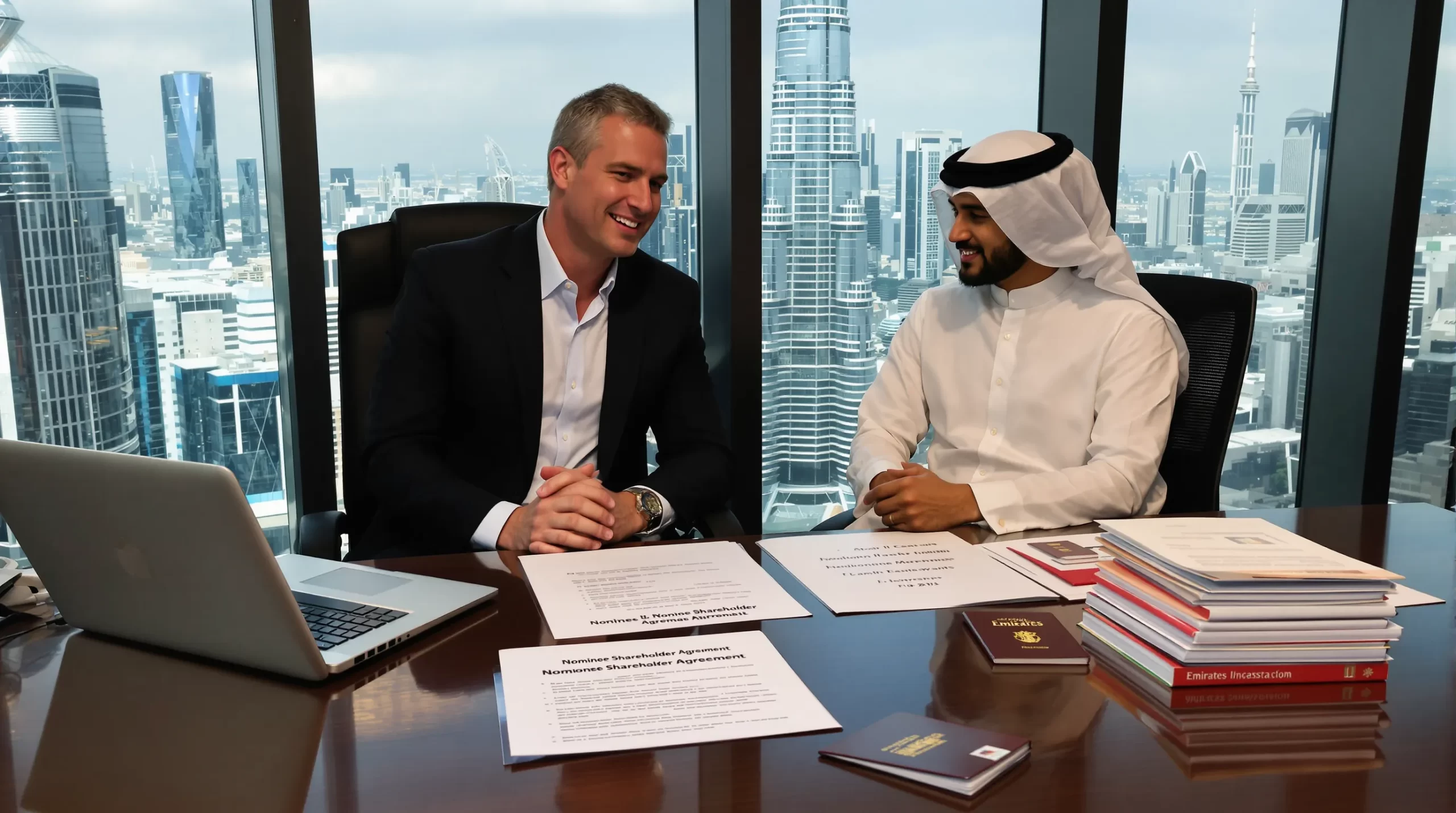
Starting a mainland company in Dubai opens doors to a consumer market of 3.6 million residents and duty-free access to the wider GCC—but it also means partnering with a UAE national sponsor. For many Australian founders accustomed to 100 % foreign ownership at home, the idea of handing 51 % of shares to a local partner can feel daunting. The good news is that with the right structure, the local sponsor arrangement can be a purely nominal requirement that never interferes with management control or profit distribution. The challenge is picking a sponsor who is reputable, responsive, and aligned with your commercial goals.
1. Why a Local Sponsor Still Matters in 2025
Federal Decree-Law (26) of 2020 ushered in 100 % foreign ownership for 1,000+ activity codes—but over one-third of mainland commercial licences still require an Emirati shareholder or Local Service Agent (LSA), according to the UAE Ministry of Economy. Sectors such as strategic logistics, security, and certain professional services remain on the “restricted” list. For Australian entrepreneurs setting up trading, retail, or regulated consultancies, a sponsor is therefore non-negotiable.
Besides regulatory compliance, a well-connected sponsor can:
- Fast-track approvals with the Department of Economy and Tourism (DET).
- Unlock government tenders closed to fully foreign-owned entities.
- Provide invaluable cultural navigation when hiring staff or negotiating leases.
2. Three Sponsorship Models Explained
| Model | Legal Form | Typical Use Case | Key Considerations |
|---|---|---|---|
| Individual Sponsor | UAE national (natural person) holds 51 % share capital | Trading companies, restaurants, retail outlets | Personal reputation critical; succession risk if sponsor passes away |
| Corporate Sponsor | 100 % Emirati-owned LLC or PJSC holds 51 % | Large ventures needing institutional backing | Higher fees but more structured governance; reduced personal risk |
| Local Service Agent (LSA) | UAE national acts as service agent; no shareholding | Professional & consultancy licences | Suitable when foreigner can retain 100 % ownership by law |
Tip: An LSA is a better choice for management consulting, IT services, and similar “professional” activities that the DET lists as eligible for full foreign ownership.
3. The Six-Point Checklist for Choosing the Right Sponsor
- Industry Alignment
A sponsor with experience in your sector can open doors that a generalist cannot. If you plan to import organic food from Australia, a sponsor who already holds food-stuff quotas with Dubai Municipality is worth the premium. - Commercial Reputation
Search the UAE Courts eServices portal for pending litigation. Don’t rely solely on glossy LinkedIn profiles—ask for trade references and proof of cleared debts. - Contractual Flexibility
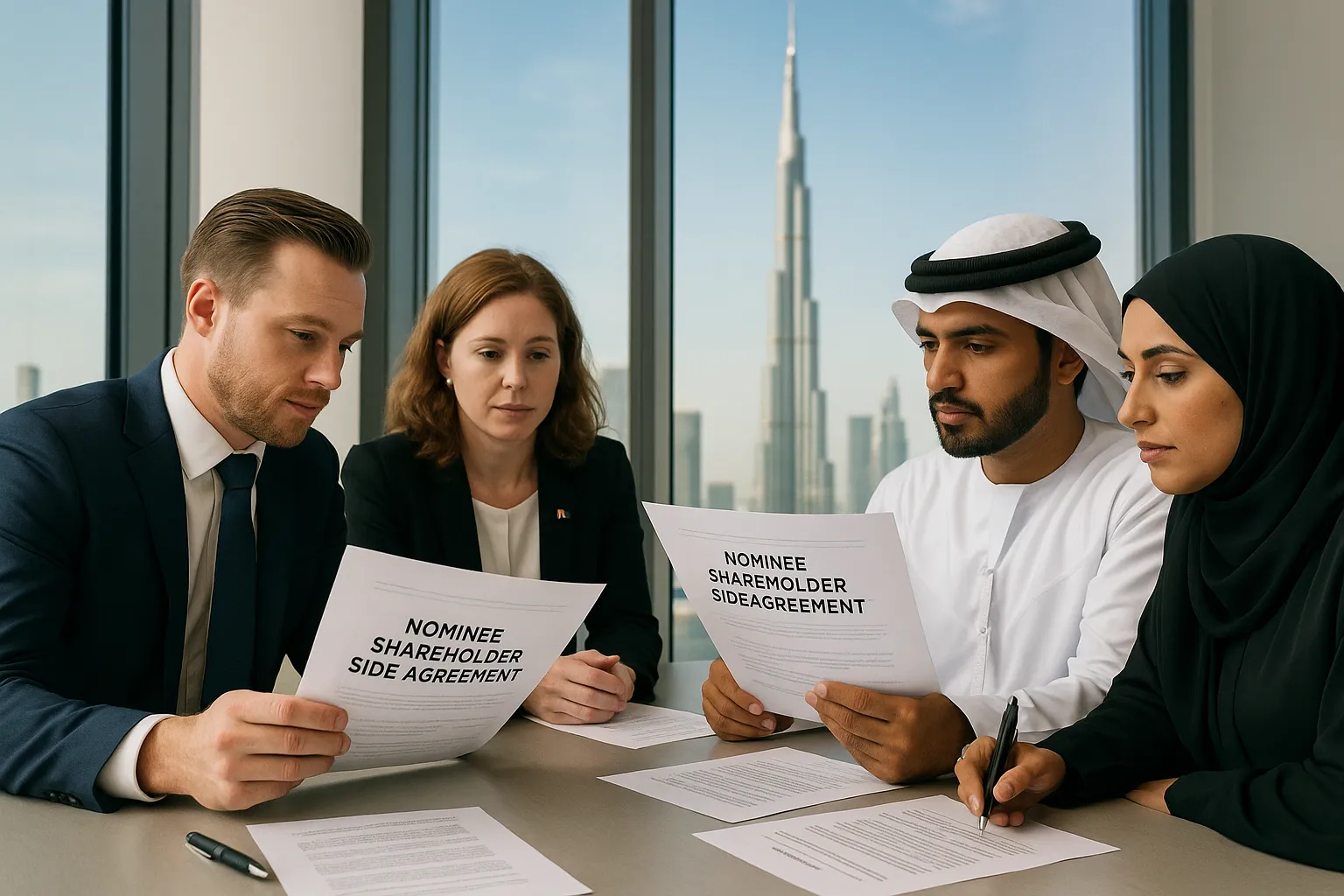
Ensure the sponsor is willing to sign a side agreement (often called a nominee shareholder agreement) that:- Assigns full management authority to you via power of attorney.
- Confirms annual sponsor fees are fixed and not tied to profit.
- Includes an exit clause allowing you to transfer shares if laws change.
- Responsiveness & Availability
Government portals such as e-Channels and the DET’s Invest Dubai still require in-person signatures for certain actions. Delays cost money—test response times early by sending a draft MoU and noting how quickly the sponsor reverts. - Fee Transparency
Market-rate sponsor fees in 2025 range from AED 20,000 to AED 70,000 (≈ AUD 8,300–29,000) per year, depending on business activity and the stature of the sponsor. Anything dramatically lower can signal hidden revenue-sharing demands later. - Succession Planning
For individual sponsors, clarify what happens if the sponsor dies or becomes incapacitated. A corporate sponsor or a sponsor who places shares into a family trust mitigates this risk.
4. Conducting Due Diligence Like a Pro
- Corporate Registry Checks: Search the DET licence database to confirm the sponsor’s existing holdings and whether any licences have been revoked.
- Credit Reports: Emirates Credit Information Company (Emcredit) provides corporate credit files for a fee; request one before signing.
- Site Visits: Meet the sponsor at their registered office, not a hotel lobby. A legitimate corporate sponsor will have permanent premises.
- Interview Past Partners: Use chambers of commerce networks (e.g., Australian Business Council Dubai) to reach previous foreign partners.
Red Flags
- Sponsor insists on holding the company’s cheque book.
- Side agreement drafted only in Arabic without certified English translation.
- Sponsor refuses to notarise an Irrevocable Power of Attorney.
5. Negotiating a Sponsor Agreement That Protects You
- Set a Flat Annual Fee
Payable after licence renewal, not upfront. Build in a CPI-linked adjustment cap. - Clarify Profit & Voting Rights
Attach a separate MoA stating foreign partner receives 100 % of profits and full board control. - Include Transfer Mechanisms
If the activity later becomes eligible for 100 % foreign ownership, the sponsor should commit to transfer shares for a token sum. - Add Dispute Resolution in DIFC Courts
DIFC judgments are enforceable in onshore Dubai, offering common-law style certainty appealing to Australian investors.
6. Cost Benchmarks for Australian Founders
| Expense Item | Typical Range (AUD) | Notes |
|---|---|---|
| Annual Sponsor Fee | 8,300 – 29,000 | Lower end for LSA, higher for corporate sponsor |
| Legal Drafting (MoA + Side Agreement) | 2,000 – 5,000 | Depends on bilingual documentation |
| DET Licence & Immigration Deposits | 5,500 – 12,000 | Variable by activity code |
| Investor Visa per Partner | 1,200 – 1,800 | 2-year renewable |
Source: Dubai Invest client data 2024-2025, converted at AUD 1 = AED 2.45.
7. Common Mistakes—and How to Avoid Them
- Choosing the Cheapest Sponsor: Could lead to future interference in banking or hiring.
- Using Generic Templates: UAE courts may deem poorly translated agreements unenforceable.
- Ignoring Cultural Fit: Weekly face-to-face catch-ups over coffee can resolve issues before they escalate.
- Failing to Plan an Exit: Build a drag-along clause if you intend to sell the company.
8. How Dubai Invest Streamlines the Process
At Dubai Invest we specialise in connecting Australian entrepreneurs with pre-vetted Emirati sponsors who understand international corporate governance. Our in-house legal team drafts bilingual side agreements compliant with both DET guidelines and Australian common-law risk appetites, while our concierge desk handles:
- Sponsor introduction meetings within 48 hours of enquiry.
- Background checks via Emcredit and UAE courts.
- Negotiation of fixed-fee structures with CPI caps.
- End-to-end licence, visa, and bank account opening within an average of 21 business days.
Ready to secure a sponsor who supports—not controls—your mainland venture? Book a free 30-minute strategy call at dubaiinvest.com.au to discuss your industry and ownership goals.
If you happen to be in Dubai this November, join our panel on foreign ownership reforms at the Grand Business Conference where Emirati corporate sponsors and Australian founders will share live case studies.
Final Thoughts
Choosing the right local sponsor is less about ceding control and more about forging a strategic alliance. By conducting thorough due diligence, negotiating watertight agreements, and leveraging specialist advisors like Dubai Invest, Australian entrepreneurs can enjoy the tax-efficient, high-growth advantages of Dubai’s mainland while safeguarding full operational control and profits. Invest smart—partner wisely.