Dubai has matured into a global real estate market that attracts international capital for a simple reason: it offers a rare mix of scale, infrastructure, landlord-friendly regulation, and strong tenant demand across both premium and mid-market segments. For overseas buyers, the market is also relatively transparent compared with many emerging destinations, with regulated brokers, established master developers and clear freehold zones. Learn more about how Dubai Invest supports overseas investors through professional Real Estate Investment services.
Overseas investors are drawn to Dubai because the return profile can be compelling when compared with many major global cities: rental demand has been supported by population growth, business migration, tourism and a large professional expat base.
For Australians specifically, property investment in dubai is often considered as a portfolio diversifier, a potential lifestyle hedge, and a way to gain exposure to a fast-moving market that operates on different economic drivers to Sydney or Melbourne.
Residential assets are the most common entry point for overseas investors because the tenant pool is broad and liquidity is generally stronger. Common residential strategies include:
The key is matching the unit type to the dominant renter profile of the neighbourhood.
Commercial property can offer attractive yields, but it is more sensitive to location, tenant quality, fit-out costs and vacancy cycles. Typical segments include:
Commercial can suit experienced investors who are comfortable underwriting leases and tenant risk.
Off-plan properties are purchased before completion. Investors often choose off-plan for:
The main selection challenge is developer quality, handover reliability and choosing a project that will compete well once supply is delivered.
Ready properties are completed assets where you can assess the building, the view, the finishing, and sometimes the current rent history. Ready stock is often preferred when investors want clearer numbers and faster leasing outcomes.
Luxury property in Dubai is its own segment, driven by global wealth flows, trophy locations, branded residences and lifestyle appeal. Luxury can outperform, but it can also be more cyclical and more sensitive to project differentiation.
| Property type | Typical investor goal | Main selection lens |
|---|---|---|
| Residential apartment | Liquidity and steady rental demand | Tenant profile, service charges, building competition |
| Villa or townhouse | Long leases and family tenants | Community amenities, school access, layout, maintenance |
| Off-plan | Upside potential and payment flexibility | Developer track record, handover pipeline, resale depth |
| Commercial | Higher yield potential | Tenant quality, lease terms, vacancy risk |
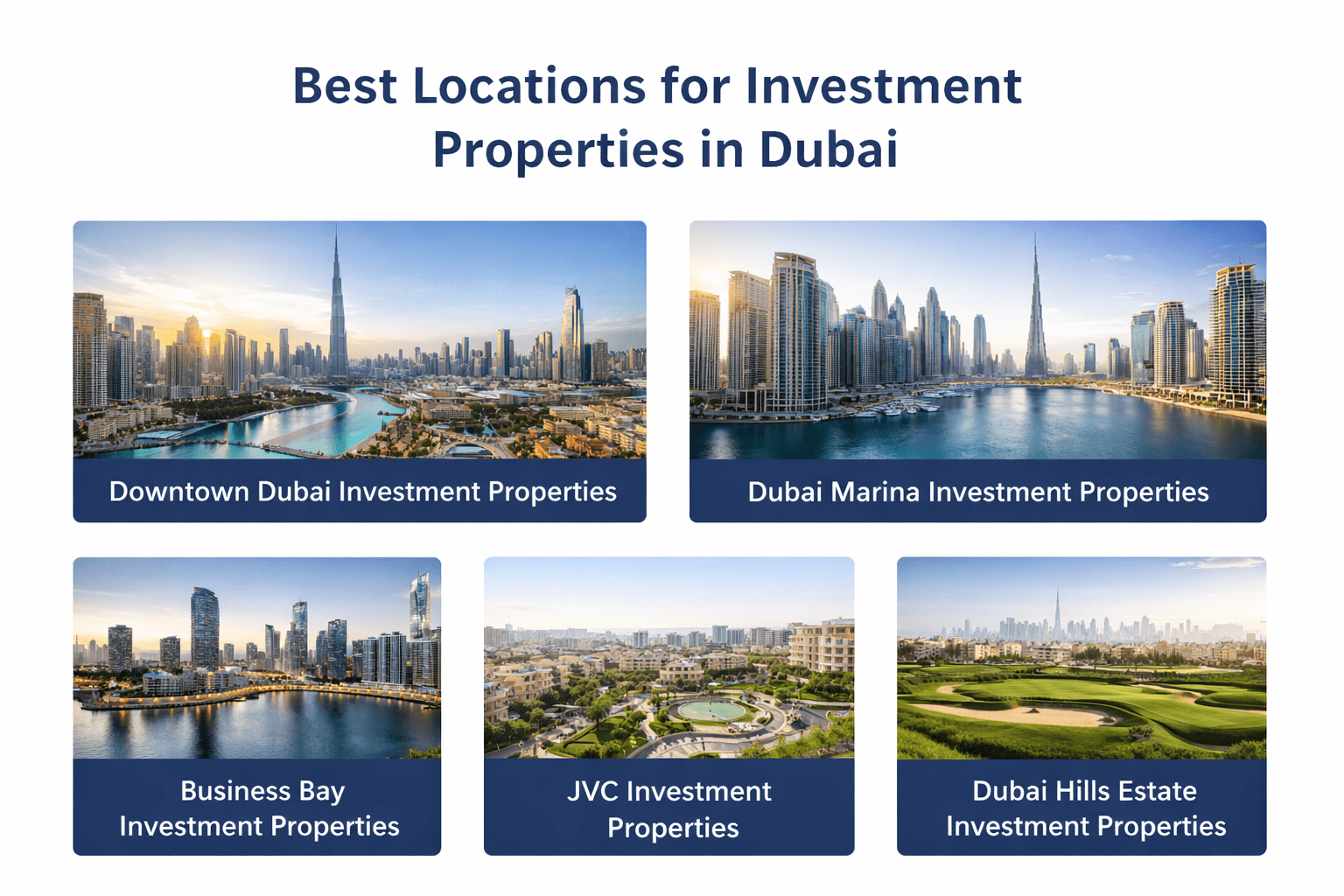
Downtown is driven by prestige, tourism, prime amenities and iconic demand anchors. It often suits investors prioritising location strength and liquidity over “cheap entry”.
Dubai Marina remains a rental-demand powerhouse with strong appeal for professionals and short-term stays (where permitted and well-managed). Building quality varies widely, so selection is more “tower-specific” than many buyers expect.
Business Bay is a dense, centrally located district that blends residential and commercial demand. It can suit investors seeking modern stock and proximity to key business nodes.
Jumeirah Village Circle (JVC) is frequently considered by yield-focused investors because it can offer lower entry points and consistent tenant demand. Performance can be building-dependent, so your selection framework matters.
Dubai Hills Estate is popular with family tenants and lifestyle buyers, with strong master planning and amenity depth. It often suits investors looking for longer-hold stability and community-driven demand.
Rental yields in Dubai vary sharply by building, service charges, furnishing level, vacancy and management. Many Australian investors evaluating property investment in dubai focus on “headline yields”, but the real decision should be based on an after-cost view (service charges, maintenance, leasing fees and vacancy allowances).
Capital growth tends to be most resilient in locations with limited comparable supply, strong infrastructure, and enduring end-user appeal. Off-plan markets can show faster price moves, but they also require more careful project selection.
Return style depends on your asset and tenant fit:
Dubai Invest can help you compare these options at the suburb and building level, not just at the “Dubai-wide average” level- while also helping you assess short-term versus long-term investment strategies based on your income goals, risk tolerance, and management preferences.
Australians often prioritise a combination of yield, liquidity and ease of remote management. Currency considerations also matter, particularly when you are funding deposits from Australia or repatriating rental surplus.
Expats living in the UAE may have different priorities, such as proximity to work, schools, and commuting routes. Their selection can lean more toward lifestyle-driven communities and longer hold periods.
First-time investors are usually best served by simple, repeatable demand drivers: proven rental neighbourhoods, straightforward unit types, and buildings with stable owner-occupier and tenant appeal.
In Dubai, the developer and the specific building can matter as much as the suburb. Two towers in the same district can deliver very different net outcomes due to service charges, maintenance quality, and tenant perception.
Start with the renter story. Ask: who rents here, why do they choose it, and what would make them renew? That lens often leads you to the right unit mix, furnishing level and building amenities.
Your budget should be assessed against “total cost to hold”, not just purchase price. Entry point also impacts liquidity: mid-market stock often trades more frequently than ultra-niche assets.
Exit potential improves when you buy what the next buyer wants. That usually means practical layouts, good building reputation, realistic service charges and a district with repeatable demand.
Dubai Invest focuses on matching Australians with investment-grade options that suit their strategy, whether that is yield focus, capital growth, lifestyle use, or a blended approach.
Rather than relying on generic marketing claims, Dubai Invest supports a numbers-first view of suburb performance, building-level risk and tenant demand drivers. Jomon’s job experience and business experience in Dubai adds a practical on-ground perspective that many remote investors lack.
Developer quality is one of the most important inputs to long-term outcomes. Dubai Invest helps investors filter for reputable developers and projects that fit a defined investment thesis.

Dubai property can be attractive for Australians seeking portfolio diversification, potentially higher rental yields, and exposure to a different economic cycle than Sydney or Melbourne. Outcomes depend heavily on location, building quality, service charges, and tenant demand.
Off-plan properties offer staged payments and potential upside but require careful developer and project selection.
Ready properties allow immediate rental income and clearer performance assessment.
The right choice depends on risk tolerance, time horizon, and cash-flow goals.
Yes. Australian investors can buy freehold property in approved areas of Dubai with full ownership rights. There are no restrictions on the number of properties you can own.
Returns vary by building, service charges, tenant demand, and management. Investors should focus on net rental yield after costs rather than headline advertised figures.
Costs typically include:
Dubai Land Department transfer fee
Agent commission
Annual service charges
Maintenance and leasing fees
Dubai currently has no capital gains tax on property.