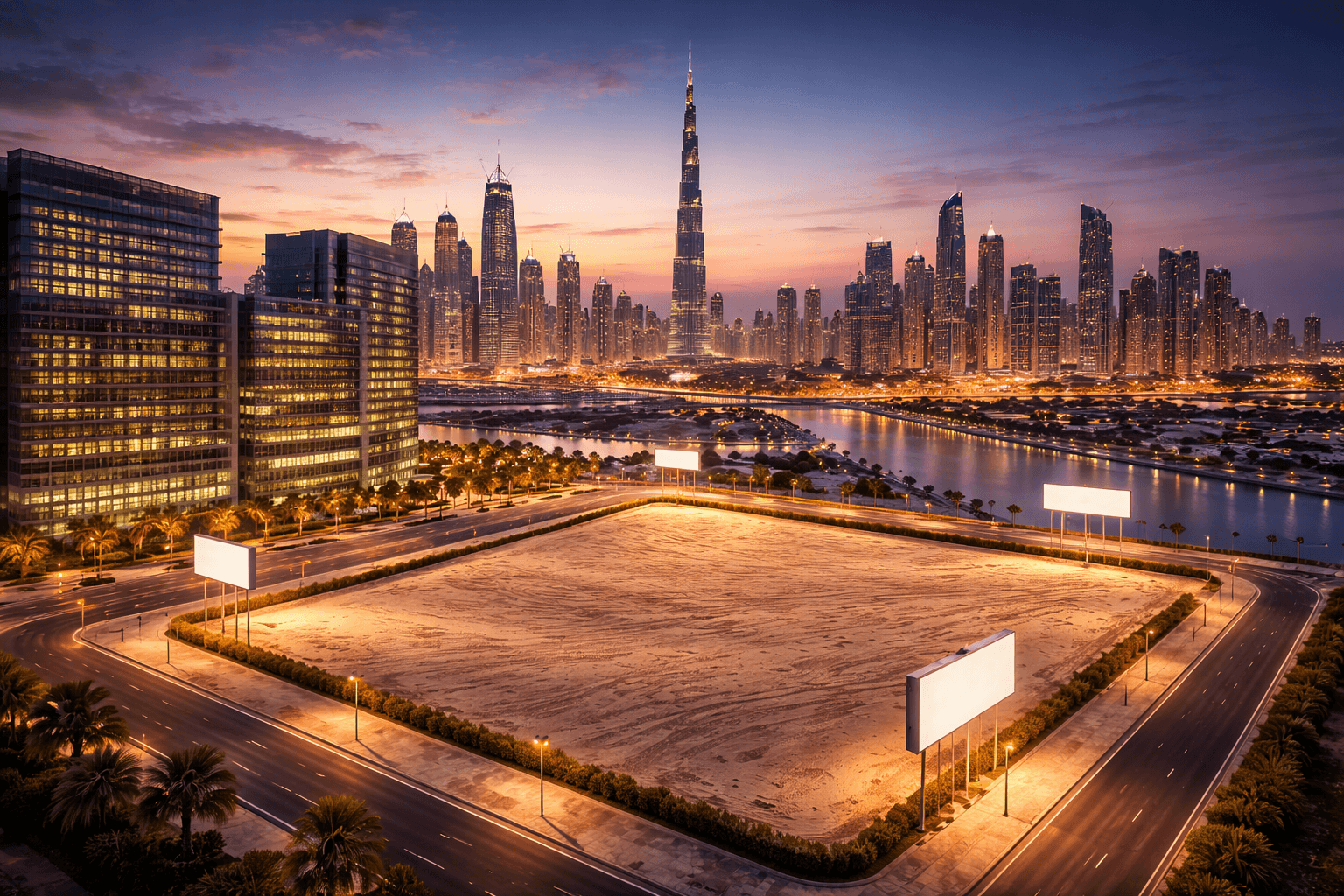
Prime locations. Strong capital growth potential. Strategic investment opportunities for local & international investors.
If you are looking beyond apartments and villas, Commercial Land for Sale in Dubai can offer a different type of upside: value creation through development, long-duration land banking, or build-and-lease strategies tied to Dubai’s expanding business districts.
For Australian investors, commercial plots require tighter underwriting than residential. Zoning, infrastructure status, approvals, holding costs, and exit liquidity matter more, and small mistakes are expensive. That is why most serious buyers start with a consultation to confirm what you can buy as a foreigner, which freehold zones fit your strategy, and how to structure the acquisition.
Dubai Invest supports Australians end-to-end, and our lead consultant Jomon brings job and business experience in Dubai that helps you navigate the on-ground reality, not just the marketing.
Dubai’s commercial land market is driven by its role as a global hub for trade, logistics, tourism, and regional headquarters.
Key advantages investors typically assess:
When evaluating Commercial Land for Sale in Dubai, the “why” must be backed by a clear use case, land banking, build-to-suit, or a develop-and-sell plan.
Dubai offers a wide range of commercial plots. The right type depends on tenant demand, financing options, and approval complexity.
Common categories include:
Each type has different planning requirements and risk profiles. For Australians buying remotely, it is essential to verify permitted use and development controls before any deposit.
Understanding tenure is non-negotiable.
What foreigners can buy: foreign individuals and foreign-owned entities can generally buy freehold commercial land only in designated freehold zones, subject to the plot’s title and permitted ownership rules.
Key freehold zones: availability changes by master developer releases and secondary listings, so your shortlist should be confirmed case-by-case.
Leasehold structure explained: leasehold is a long-term right to use the land for a defined term, and can come with renewal conditions and limitations on transfer.
Legal considerations: title checks, plot encumbrances, community/master developer rules, and approval pathways should be confirmed through due diligence.
If you are comparing Commercial Land for Sale in Dubai options, tenure impacts resale, bankability, and your long-term control.
“Best” depends on your development thesis. In 2026, these areas are commonly assessed for different commercial plays:
| Area | Often Considered For | What to Validate Before Buying |
|---|---|---|
| Business Bay | Office, mixed-use, hospitality adjacency | Plot use, traffic access, competing supply |
| Dubai South | Logistics, industrial, Expo City-linked growth | Infrastructure phasing, tenant pipeline |
| Jebel Ali | Warehousing, industrial, trade-linked uses | Permitted use, trucking access, utilities |
| Dubai Investment Park (DIP) | Industrial and mixed commercial | Zoning, connections, labour access |
| Al Quoz | Industrial and creative commercial | Redevelopment constraints and planning |
| Mohammed Bin Rashid City (select zones) | Premium mixed-use pockets | Freehold eligibility and master rules |
Pricing for commercial plots varies significantly, even within the same district. Instead of relying on generic averages, underwrite each plot based on its development potential.
Price per square foot overview: pricing is typically higher in prime, established districts and lower in emerging growth corridors, but zoning and FAR can outweigh “prime vs emerging”.
Prime vs emerging areas: prime areas may offer faster liquidity; emerging areas may offer stronger upside if infrastructure and demand materialise.
What affects land valuation:
Market trends in 2026: many investors are focusing on infrastructure-linked corridors and logistics-driven demand, but plot selection remains highly specific.
When you assess Commercial Land for Sale in Dubai, your model should be driven by what you can build and lease, not just land size.
Commercial land returns are usually realised through one of three routes:
Development-led ROI: create value by obtaining approvals, building, and selling or leasing the completed asset.
Land banking strategy: hold land in a location expected to benefit from infrastructure and business growth, aiming for capital appreciation.
Build-and-lease model: develop warehouses, offices, or retail, then lease to generate cash flow (requires strong tenant and capex planning).
Capital appreciation outlook: depends heavily on zoning, infrastructure delivery, and absorption of new commercial supply.
Dubai Invest can help Australians model conservative and upside cases so you are not buying based on optimistic projections.
Regulations differ by district, master developer, and plot classification.
Core items to verify:
This is where on-ground experience matters. Jomon’s Dubai business experience helps interpret how approvals are actually handled in practice and what typically causes delays.
Budgeting needs to include transaction costs plus due diligence and early-stage feasibility.
Typical cost items include:
| Cost Item | What It Is | Why It Matters |
|---|---|---|
| Dubai Land Department (4% transfer fee) | Transfer fee applied to the transaction | Major entry cost driver |
| Registration & trustee fees | Administrative fees linked to transfer | Impacts total closing costs |
| Agency commission | Broker/agency fees (deal-dependent) | Must be agreed upfront |
| Infrastructure & connection charges | Utilities and site connection requirements | Can materially impact feasibility |
| Legal & due diligence costs | Title checks, contract review, feasibility support | Reduces legal and planning risk |
Ownership eligibility depends on whether the land is in a freehold zone and the plot title permits foreign ownership.
Company vs personal ownership: some investors prefer a company structure for asset segregation and future exit flexibility, but it adds compliance and banking considerations.
Golden Visa eligibility: residency outcomes depend on the investment route and government requirements at the time of application, so treat visa planning as a separate workstream, not an assumption.
Financing options for overseas buyers: availability varies by plot, intended use, and buyer profile. Finance is typically more complex for land than for completed residential units.
A consultation is the fastest way to confirm what is possible for you as an Australian buyer before you commit to a specific plot.
Commercial land is often sold as part of master developments, but you will still see differences in risk.
Developer masterplan plots: may come with clearer community planning, but you must validate infrastructure timelines and any master developer obligations.
Secondary market land: can offer pricing opportunities, but due diligence is critical, title status, encumbrances, and permitted use must be verified.
Risk comparison: the biggest risks typically relate to zoning mismatch, infrastructure delays, and liquidity.
Payment plan options: some master developers offer structured plans, but terms vary widely.
When comparing Commercial Land for Sale in Dubai, align plot “readiness” with your holding capacity and project timeline.
A typical workflow includes:
Australians buying remotely often need additional coordination around document signing, KYC, and funds transfer timing
Commercial land can be high-upside, but it is less forgiving.
Key risks include:
A structured consultation helps you quantify these risks, then decide whether to proceed, renegotiate, or walk away.
Commercial transactions reward deal discipline.
Dubai Invest supports Australian investors with:
If you are evaluating Commercial Land for Sale in Dubai, working with an adviser who understands both Australian expectations and Dubai’s on-ground process can materially reduce risk.
Yes, Australians can buy in designated freehold zones if the plot title and rules allow foreign ownership.
It depends on the location. Some areas offer freehold ownership, while others operate on long-term leasehold (typically 30–99 years).
Not always. You must verify:
Zoning regulations
Permitted land use
Building height limits
Infrastructure availability
Developer approvals
Permitted uses vary by zone and may include:
Office buildings
Retail spaces
Warehousing
Mixed-use developments
Hospitality projects
You can check with:
Dubai Municipality
The master developer
Dubai Land Department
Your legal advisor or property consultant
Due diligence is critical before committing.