
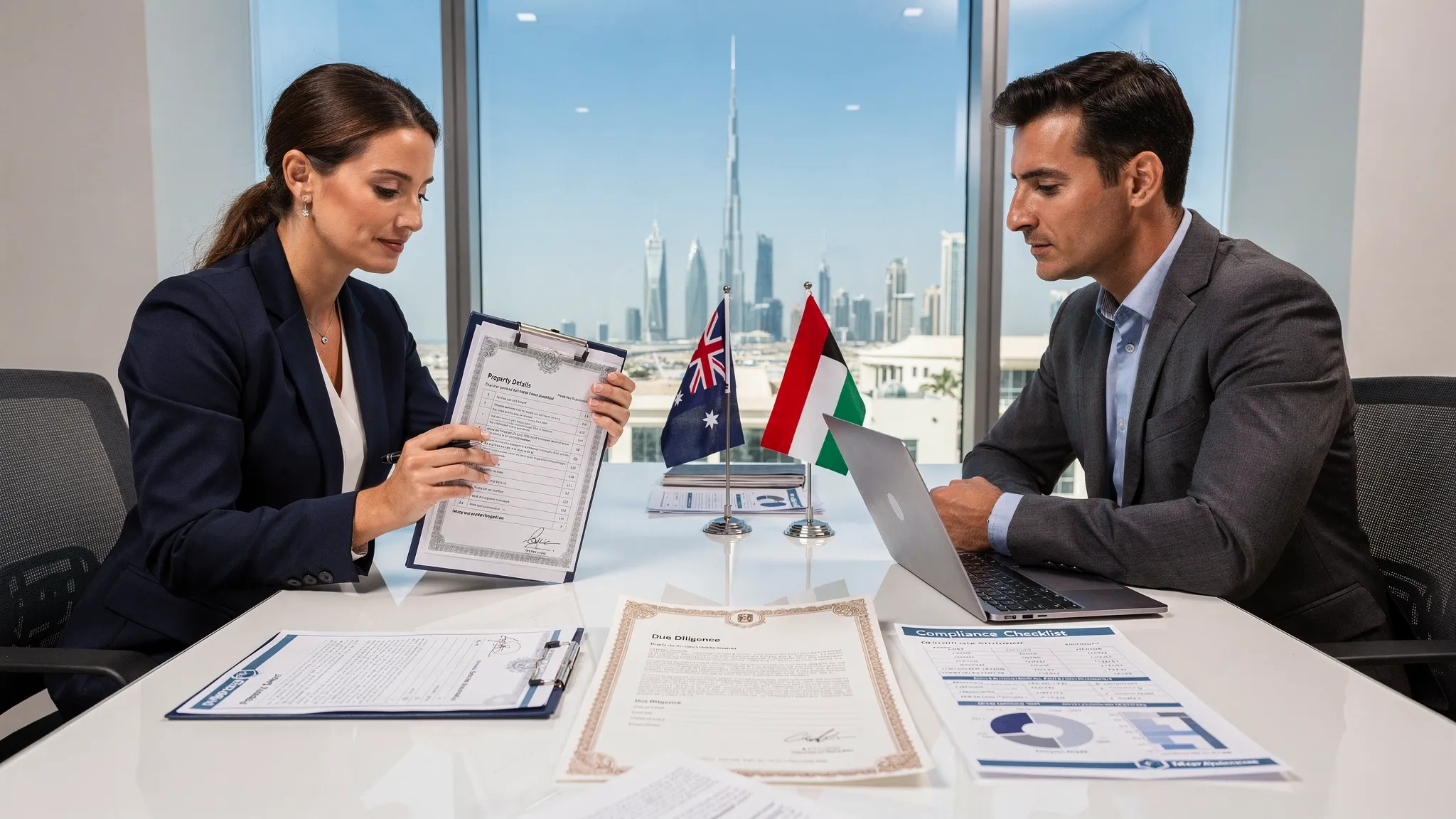
Buy Dubai Property via SMSF: Rules, Benefits & Process
Buying property in Dubai through your Self-Managed Super Fund (SMSF) sounds like a neat shortcut: diversify offshore, target strong rental markets, and keep it all inside the concessional super environment.
In practice, SMSF property investing overseas is possible, but it is also one of the fastest ways to accidentally breach Australian super law if the structure, usage, financing, and documentation are not set up correctly. The bigger the purchase, the more expensive a mistake becomes.
This guide breaks down what Australians must know before trying to buy Dubai property via SMSF, and why a proper consultation (with the right cross-border specialists) matters.
What Is an SMSF and How Does It Work?
An SMSF is a private superannuation fund you run yourself as a trustee (individual trustees or a corporate trustee). The fund exists for one purpose: to provide retirement benefits to its members.
From a rules perspective, SMSFs are regulated under Australian superannuation law, and the Australian Taxation Office (ATO) is the primary regulator for SMSFs. This matters because even if an investment is “allowed” in Dubai, it still must comply with Australian SMSF rules.
Two practical implications for overseas property:
First, your SMSF must be able to show why the investment meets the fund’s strategy (risk, liquidity, diversification, cash flow). Second, your SMSF must be able to administer, value, audit, and document the asset properly each year.
Can Australians Use an SMSF to Invest in Overseas Property?
Yes, an SMSF can invest in overseas assets, including international property, as long as the investment:
- Complies with the Superannuation Industry (Supervision) Act and regulations
- Aligns with the fund’s written investment strategy
- Is managed on an arm’s length basis
The ATO is clear that SMSF trustees can invest in many asset classes, but trustees must understand and follow the rules. A helpful starting reference is the ATO’s general guidance on SMSF investments.
Where overseas property becomes tricky is not the concept of “international”, it is the execution: ownership, contracts, ongoing costs, cash movement, audit evidence, and ensuring no member or related party benefits today.
Is It Legal to Buy Dubai Property Through an SMSF?
Potentially, yes, it can be legal for an Australian SMSF to buy Dubai property, but “legal” depends on the details.
Common deal-breakers include:
- The property is used by a member, or anyone related to a member (even temporarily)
- The fund borrows incorrectly, or uses a non-compliant lending structure
- The purchase is not at arm’s length, or includes benefits/discounts that create non-arm’s-length income issues
- The trustees cannot prove title, valuations, income, expenses, and cash flows to satisfy the fund auditor
Also note: Dubai’s property buying process, title registration, escrow mechanics (especially for off-plan), and payment schedules can be very different from Australia. That is exactly where trustees need deal-level advice, not generic forum tips.
Key SMSF Rules Australians Must Follow Before Investing Overseas
If you are considering Dubai property inside super, these are the non-negotiables to pressure-test early.
Sole purpose test. The SMSF must be maintained solely to provide retirement benefits. If the purchase is influenced by lifestyle use, future personal relocation plans, or providing a benefit to members now, you are in dangerous territory. The ATO explains the principle in its overview of the sole purpose test.
No current-day benefit. Residential property in an SMSF generally cannot be lived in by members or related parties, and it cannot be rented to them.
Arm’s length terms. Purchase price, rent, property management, and related services must be on commercial terms, with evidence.
Borrowing restrictions. SMSFs have strict rules around borrowing. If you intend to use finance, you must ensure any borrowing structure is compliant under Australian super law (and is realistically available for a UAE asset). Many overseas “mortgage-like” arrangements will not map cleanly to SMSF borrowing rules.
Liquidity and cash-flow planning. Dubai property can involve service charges, maintenance, vacancy periods, and foreign-currency expenses. Trustees must show the fund can pay expenses and member obligations without stress.
Auditability and evidence. Your auditor will need documents they can rely on: contracts, proof of title, bank statements, independent valuations, lease agreements, and evidence of rent received.
A practical way to summarise the difference is below.
| Issue | What SMSF trustees must prove | Why it matters in Dubai deals |
|---|---|---|
| Purpose | Investment supports retirement outcomes | Lifestyle motivations can breach sole purpose test |
| Usage | No member or related-party use | “Holiday use” can be a compliance breach |
| Cash flow | Fund can cover costs and obligations | Service charges and FX timing can bite |
| Evidence | Clear contracts, title, valuations, income records | Overseas paperwork must satisfy Australian audit standards |
| Terms | Arm’s length purchase and ongoing management | Informal arrangements create ATO risk |
Why Dubai Property Attracts Australian SMSF Investors
Even with extra compliance complexity, Dubai remains on the radar for some SMSF trustees because it can offer a very different property profile to Australian capital cities.
Key attractions typically include:
- Exposure to a different economic cycle and tenant demand base
- The ability to buy in designated freehold areas (where foreign buyers can own)
- Investor-friendly transaction processes compared with some other jurisdictions
For Australians specifically, Dubai can also be attractive because many steps can be coordinated remotely, including inspections, documentation, and settlement logistics, if you have an on-ground team to verify the details.
This is where Dubai Invest’s work becomes practical, not theoretical. Our lead consultant, Jomon, has both job experience and business experience in Dubai, which helps Australians interpret what is “normal marketing” versus what is actually bankable and executable on the ground.
Risks of Buying Dubai Property Through an SMSF
SMSF trustees should treat “Dubai property via SMSF” as a higher-complexity strategy with multiple risk layers.
Compliance risk (Australia). A small misstep can become a major issue: non-compliant usage, non-arm’s-length arrangements, or poor documentation can trigger ATO attention.
Financing mismatch. Many trustees assume they can “just get a loan”. In reality, SMSF borrowing is highly constrained, and overseas property finance can be difficult to align with Australian SMSF requirements.
Currency and transfer friction. Buying and holding in AED while funding from AUD creates FX exposure. Timing of deposits, settlement, and recurring costs can materially change outcomes.
Operational risk as a remote landlord. If your SMSF owns the asset, the fund must manage property manager selection, leasing, maintenance decisions, and record-keeping in a way your auditor can verify.
Market and project risk. Off-plan deals introduce delivery and contract risk. Even with escrow and regulation, trustees need to understand completion timelines, handover terms, and exit liquidity.
A consultation is not a sales step here, it is a risk-control step. The best time to structure properly is before you pay any booking fee.
Alternatives to Buying Dubai Property via SMSF
If your goal is exposure to Dubai real estate, an SMSF is only one possible route.
Depending on your objectives, alternatives may include:
- Buying personally (in your own name), if you want flexibility around resale timing, financing, or future personal use
- Buying with a spouse or family structure (with tailored tax advice)
- Buying through a company or SPV structure (often used for asset separation and multi-property ownership, with added compliance)
Which option is “best” depends on your residency, tax position, risk tolerance, and how hands-on you want to be.
Steps Australians Should Take Before Investing Through SMSF
Before you commit to a Dubai purchase inside super, do the pre-work in the right order.
First, get SMSF-specialist advice in Australia on whether the strategy is suitable for your fund (and what rules will constrain you). Then validate the Dubai-side deal mechanics, including ownership, title process, costs, and rental assumptions.
It can also help to see what questions real investors ask when deals go wrong, especially around off-plan delays, service charges, and property management. Some buyers use tools like Redditor AI to surface recurring investor discussions and objections early, so they can build a due diligence checklist before speaking to agents.
Most importantly, document everything. In an SMSF, “I thought it was fine” is not evidence.
How Australians Can Buy Property in Dubai
Regardless of whether you buy inside or outside an SMSF, the Dubai purchase process usually comes down to clear stages: selecting the right freehold area, verifying the seller or developer, reviewing the contract, completing KYC and payment steps, and registering ownership through the Dubai Land Department pathway relevant to the transaction (ready property versus off-plan).
Where Australians often get caught is assuming Dubai is one single market. It is not. The unit’s building quality, service charges, title status, and leaseability drive outcomes more than suburb headlines.
If you want help buying remotely from Australia, Dubai Invest can coordinate the on-ground validation and end-to-end process management, from document handling to settlement sequencing. This is especially important if you are trying to line up multiple moving parts (FX timing, banking, ownership structure, and property management).

Why Some Australian Investors Prefer Buying Dubai Property Outside SMSF
Many Australians decide not to use an SMSF for Dubai property, even if they technically could.
Common reasons include:
Flexibility. Personal ownership usually provides more flexibility around how the property is used (subject to UAE rules), how it is financed, and how quickly it can be sold.
Simplicity. SMSF trustees must maintain higher documentation standards and ensure the investment remains compliant every year, not just at purchase.
Speed. SMSF decision-making and advice loops can slow down execution, especially for competitive deals.
This does not mean SMSF is “wrong”. It means you should choose the structure that matches your objective, and then execute it cleanly.
What is the biggest mistake Australians make with SMSF property overseas? Treating it like a normal property purchase. SMSF trustees need audit-ready paperwork, arm’s length terms, and strict separation from personal benefit.
If you are weighing up whether an SMSF purchase is viable, the smartest next step is a deal-specific consultation before any deposit is paid. Dubai Invest can help you map the transaction end-to-end and coordinate the Dubai-side execution, and you can speak with Jomon, who brings real job and business experience in Dubai to help you avoid costly, cross-border misunderstandings. Book a consultation via Dubai Invest.