Best Areas in Dubai for Rental Income Under AED 1M
Dubai continues to attract Australian property investors in 2026 for one simple reason: income. While many major Australian suburbs sit around ~2–4% gross rental yields, Dubai still offers 6–8%+ gross yields in several investor-friendly, high-demand communities (with the right building, unit type, and leasing strategy).
The good news is that AED 1 million (roughly AUD $400k–$450k, depending on FX at the time you buy) is enough to enter multiple rental-led neighbourhoods where tenants are actively searching for studios and 1-bedroom apartments.
This guide is built for:
- First-time international investors who want a simple, evidence-led shortlist
- Australians looking for passive income plus currency diversification
What you will get from this investor guide:
- The best Dubai areas for rental income under AED 1M
- Realistic rental yield expectations (and what drives net returns)
- Tenant-demand insights by community
- Strategy tips to help you avoid common remote-investor mistakes
Why Australian Investors Are Choosing Dubai in 2026
Higher Rental Yields Compared to Australia
Most Australians already understand the maths problem at home: high purchase prices, rising holding costs, and yields that often struggle to keep pace.
Dubai is different because:
- Entry prices can be materially lower for comparable apartment stock
- Rental demand remains strong across both long-term and short-term segments
- Many communities under AED 1M have deep tenant pools (professionals, students, and new residents)
For Australians, that yield gap is not just a percentage on a spreadsheet, it can be the difference between a property that requires monthly top-ups and one that is closer to self-funding.
Tax-Free Rental Income Advantage
Dubai is widely considered tax-friendly for individual property investors:
- No UAE personal income tax on residential rental earnings (for most individuals)
- No UAE capital gains tax for most individual property sales
Important: Australians may still have ATO reporting obligations on worldwide income. The best move is to model your after-tax outcome early, then structure the purchase correctly.
Currency & Market Diversification
The AED is pegged to the USD, which many Australians view as a stabilising factor compared to being fully concentrated in AUD-based assets.
Diversification benefits that often matter in practice:
- Reducing reliance on one property cycle (Australia only)
- Holding income in a different currency base
- Matching future plans (travel, relocation, or business expansion in the region)
Compare Your ROI: Dubai vs Australia – Free Calculator: Ask for a deal-level ROI comparison
What Can You Buy in Dubai Under AED 1 Million?
Under this budget, the market is typically dominated by studios and 1-bedroom apartments, with occasional value opportunities for compact 2-bedroom units in emerging pockets (depending on building age, developer, and layout).
You will also choose between:
- Off-plan (buying from a developer before completion)
- Ready (completed property, often resale, sometimes tenanted)
Typical Property Types
Studios (High yield, lower entry cost) Studios can deliver strong yields because they hit a broad tenant base and keep the purchase price lower. They can also be more sensitive to building quality and competition, so selection matters.
1-Bedroom Apartments (Balanced ROI + resale value) For many Australians, a 1-bedroom is the “sweet spot” under AED 1M: generally wider end-user appeal, better resale liquidity in many buildings, and stable tenant demand.
Expected Rental Returns
In many under-AED 1M communities, gross yields commonly underwrite in the 6% to 8.5% range, with short-term rentals sometimes higher in the right buildings.
A reminder that matters for remote investors: net yield is driven by service charges, vacancy, leasing fees, furnishing, and management (not just rent).
Best Areas in Dubai for Rental Income Under AED 1M (2026)
The areas below are popular with value-focused investors because they combine:
- Reachable entry prices
- Consistent tenant demand
- Plenty of rentable unit stock (studios and 1-beds)
Here is a quick comparison to help you shortlist.
| Area | Typical entry price (AED) | Typical gross yield (indicative) | Tenant demand snapshot | Best fit under AED 1M |
|---|---|---|---|---|
| JVC | ~500k–900k | ~7–8% | Families, young professionals | Studio, 1-bed |
| DSO | ~450k–800k | ~6.5–8% | Tech workers, students, long-term | Studio, 1-bed |
| International City | ~300k–600k | ~7–9% | Value-driven renters, high churn | Studio, 1-bed |
| Dubai Sports City | ~500k–900k | ~7% | Young professionals, lifestyle tenants | Studio, 1-bed |
| Al Furjan | Close to ~1M | ~6–7% | End-users, commuters, metro-led | 1-bed (select deals) |
Jumeirah Village Circle (JVC)
Why it stands out: One of Dubai’s most searched affordable communities, with steady demand from families and young professionals.
Key Points:
- Entry price: ~AED 500K–900K
- Rental yield: 7–8%
- High occupancy rates
Investor note: JVC is not “one market”. Net returns vary widely by building quality, service charges, and unit orientation. This is where a consultation saves money because you shortlist the right buildings, not just the right suburb.
Dubai Silicon Oasis (DSO)
Why it stands out: A tech hub with a strong long-term tenant base, also supported by student and professional demand.
Key Points:
- Entry price: ~AED 450K–800K
- Rental yield: 6.5–8%
- Stable long-term tenants
Investor note: DSO tends to suit Australians who prefer lower drama income (long-term leasing) over high-turnover holiday letting.
International City
Why it stands out: One of the lowest entry price areas in Dubai, often appealing to investors prioritising yield over capital growth.
Key Points:
- Entry price: ~AED 300K–600K
- Rental yield: 7–9%
- High rental demand but lower capital appreciation
Investor note: International City can work well if you underwrite conservatively and choose management that actively controls vacancy and tenant quality.
Dubai Sports City
Why it stands out: Affordable pricing with lifestyle positioning, popular with young professionals.
Key Points:
- Entry price: ~AED 500K–900K
- Rental yield: ~7%
- Popular with young professionals
Investor note: Building selection matters, especially around service charges and the quality of facilities (which directly impacts rentability).
Al Furjan (Emerging Hotspot)
Why it stands out: Growing infrastructure, improving connectivity, and metro access make it an “emerging but maturing” community.
Key Points:
- Entry price: close to AED 1M
- Rental yield: 6–7%
- Strong future appreciation potential
Investor note: Al Furjan is often where Australians stretch the budget for a more end-user-led location. It can suit buyers who want yield plus longer-term growth potential.
Off-Plan vs Ready Property – What’s Better for Rental Income?
This is one of the most common decision points for Australians investing from overseas.
Off-Plan Properties
Pros typically include:
- Lower entry price
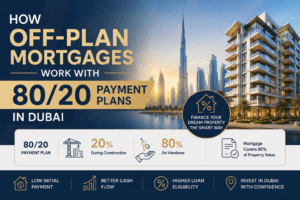
- Flexible payment plans
Trade-off:
- Delayed rental income (you only earn once handed over)
Off-plan can suit investors who prioritise capital growth potential and staged payments, and who can tolerate construction timelines.
Ready Properties
Pros typically include:
- Immediate rental income
- Easier ROI calculation using current rent and actual service charges
Trade-off:
- Higher upfront cost in some buildings
Ready property is often preferred by Australians buying primarily for cash flow.
Talk to an Expert: Off-Plan vs Ready Strategy Call: Book a strategy call
Key Factors That Impact Rental Yield in Dubai
Two properties in the same area can deliver very different net outcomes. Here is what typically drives that difference.
Location & Connectivity
Tenants pay for convenience. Proximity to metro links, business hubs, and commuter routes often improves occupancy and reduces rent discounting.
Developer Reputation
Build quality influences:
- Maintenance frequency
- Tenant satisfaction
- Long-term rentability
A cheaper unit can become expensive if quality issues create vacancy, higher maintenance, or reputation damage for the building.
Property Management
Your leasing strategy affects income stability:
- Short-term rentals can increase gross income, but management fees and seasonality can reduce net returns
- Long-term rentals can be steadier, usually with lower operational complexity
If you are managing from Australia, a strong operator is not optional, it is the engine of the investment.
For more detail read : Short-Term vs Long-Term Property Investment in Dubai
Service Charges
Service charges directly reduce net yield. Two buildings with identical rents can produce very different net outcomes if one has materially higher charges.
Hidden Costs to Consider Before Investing
Dubai is transparent when modelled properly, but investors get surprised when they focus only on the purchase price.
Key costs to plan for:
- Dubai Land Department (DLD) fee (typically ~4%)
- Agency fees (often ~2%)
- Service charges (annual)
- Maintenance and furnishing (especially if targeting premium rent or short-term leasing)
Step-by-Step Guide for Australians Buying Property in Dubai
A remote purchase is fully possible, and for many Australians it is the norm, but the sequence matters.
Step 1: Choose Property & Reserve
Shortlist the area, then shortlist the building, then shortlist the unit. Reservation typically involves a booking form and initial payment, depending on whether it is off-plan or ready.
Step 2: Sign SPA & Pay Deposit
You will sign a Sales and Purchase Agreement (SPA) (or the relevant sale contract for resale). This is where conditions, timelines, and fees must be checked carefully.
Step 3: Register with DLD
Ownership registration is completed through the Dubai Land Department process (or Oqood registration for many off-plan purchases).
Step 4: Property Handover / Rental Setup
For ready property, this is where leasing begins. For off-plan, rental starts after handover, snagging, and management onboarding.
Key Points: Remote buying is fully possible. Legal process is straightforward, but only when documents and payments are handled correctly.
Dubai Invest can coordinate the end-to-end workflow, and this is where Jomon’s on-ground job and business experience in Dubai helps Australians avoid the common timing and compliance mistakes that derail ROI.
Pro Tips to Maximize Rental Income Under AED 1M
Under AED 1M, small decisions compound quickly. These tactics often lift outcomes:
- Choose furnished units where the tenant segment supports higher rents
- Consider short-term rentals only in buildings where rules, demand, and net margins make sense
- Invest near upcoming infrastructure upgrades, but still underwrite current rentability
- Work with local property managers who can protect occupancy and control costs
If you want a tailored shortlist, the fastest path is a consultation where your budget, risk tolerance, and preferred leasing strategy are matched to specific buildings.
Conclusion
Dubai remains one of the strongest global markets for rental-led investors who want meaningful income, and AED 1M is a practical entry point into communities with proven tenant demand.
If you take one principle from this guide, make it this: area selection is not enough. The winning outcomes come from building-level due diligence, realistic net-yield modelling, and a clear leasing strategy.
Book a Free Consultation with Dubai Property Experts: Speak with Dubai Invest
Personalised area recommendations, ROI projections, and access to under-AED 1M opportunities, with guidance shaped by Jomon’s real Dubai business experience.